The CLARITY Act and the Future of Digital Assets: An Inside View from Stand With Crypto
The CLARITY Act vote, set for September 15, could mark a turning point for the digital asset industry in the United States.

*Editor's Note: This article has been updated. An earlier version referred to a CLARITY Act vote scheduled for September 15; that reference has been revised to reflect the shifting legislative timeline. The interview itself is unchanged. (Updated September 7, 2026)*
The CLARITY Act vote could mark a turning point for the digital asset industry in the United States. Building on the foundation laid by the GENIUS Act, the new legislation promises to finally give market participants clarity on who regulates them, the SEC or the CFTC, and under what conditions a digital asset stops being classified as a security.
For years, securities lawyers have debated whether a given asset qualifies as an investment contract, with no clear answer and real consequences for founders and investors trying to build within the law. CLARITY aims to close that gap, drawing a comparison to the standardization that once transformed real estate and the stock market: rules that, once set, tend to make the whole system more efficient and harder to game.
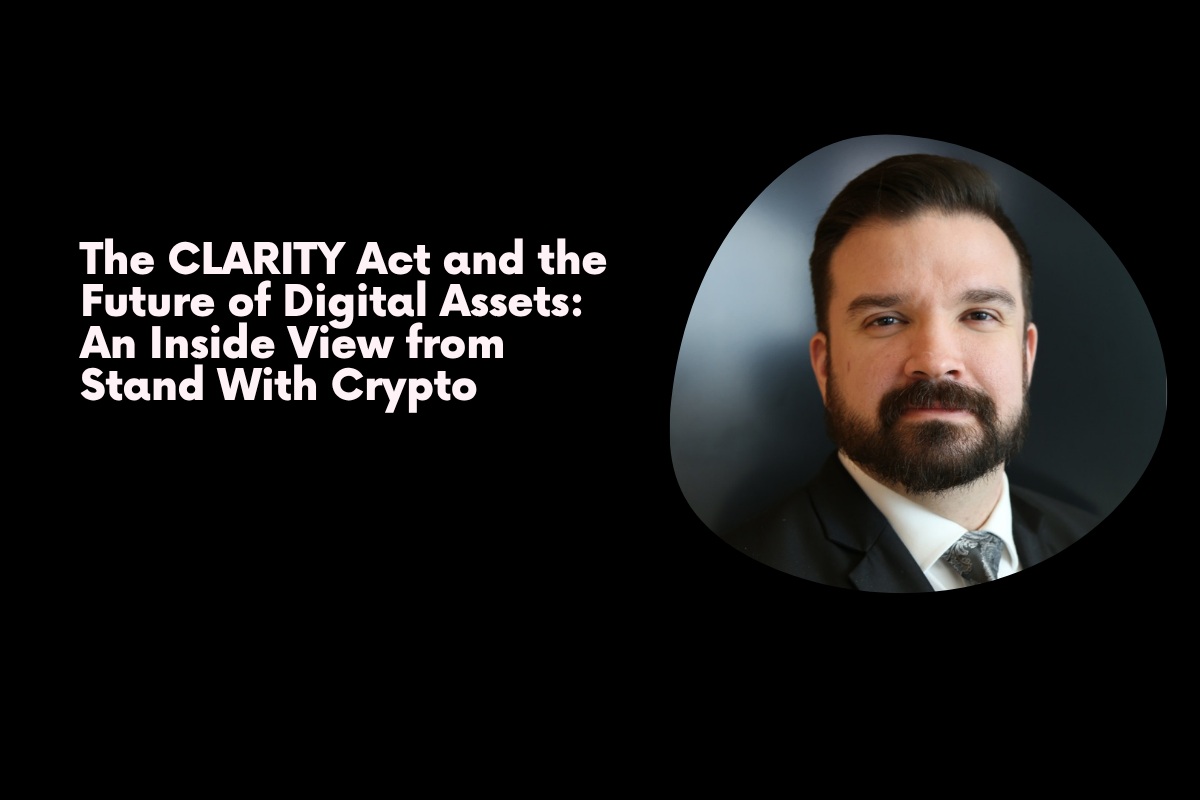
We spoke with Jonathan Dunsmoor, South Carolina Chapter President for Stand With Crypto and a securities attorney with years of experience at the intersection of law and digital assets, about what the bill will actually change on the ground, the lessons the industry took from the fight for GENIUS, and why the word "crypto" itself misleads the public about the true scope and substance of digital assets.
Crypto Law Summit runs live webinar sessions with practitioners from across the digital asset legal space throughout the year, covering the regulatory questions founders are actually facing. Join us for the next session to ask questions directly.
Q: What’s at stake for the digital asset industry in the CLARITY Act vote on September 15, and what would passage actually change on the ground?
The Securities Act of 1933 and Securities Exchange Act of 1934 were the two pieces of legislation that took the United States from a rough-and-tumble world of liars and snake oil salesmen and made them put their money where their mouth was. That’s what CLARITY is. It’s the stepping stone to help take the future of digital assets, built on the back of the GENIUS Act signed in 2025, to the next level for the capital markets and startup ecosystem. The ability, for the first time, to have actual, tangible guardrails in the United States is nothing short of extraordinary.
On the ground, it means finally knowing whether you answer to the SEC or the CFTC. And the novel use of digital assets as non-securities, under certain parameters, can open up an entirely new industry.
To this day, I hear securities lawyers debating over whether an asset is an investment contract or not. This makes it so much clearer that I expect some to lose business over it. And that’s a great thing for all except the lawyers, because just like when real estate began to be standardized (or, more properly here, the stock market), everyone became wealthier. This lead to the rules of the game being further refined with rulemaking and case law, which lawyer ultimately profited from, too.
This is not the first time in history we’ve had a chance to make things better for everyone, but this is one of those times that will be discussed in the history books, a time when everyone on both sides of the aisle stood here and said we need this for the betterment of all. That’s what it will change, everything. Because when you reduce fraud, everyone benefits.
Q: Now that the GENIUS Act is law, what lessons from that fight are shaping the CLARITY push?
GENIUS was the tip of the spear because not one person in America likes banking except for bankers. We all understand those headaches, and that’s why GENIUS was first and when it starts to be implemented in 2027, we will see how fast things begin to move. Now we are going to ramp up and make it so that the capital markets have the same revolution that GENIUS did for stablecoins.
It’s the equivalent of being able to say I was there when the electronic stock market was flipped on, but instead of having to deal with the headaches of yesteryear, we have a Congress that understands that our adversaries (and allies) are working on similar bills, because the power of the capital markets lies in its people. GameStop proved it. Regular people, acting together, moved a market the pros were sure they owned. That same power deserves real rails instead of a casino: actual guardrails for raising capital with digital assets, and actual rules for when and how a digital asset becomes a security.
I’ve spent the better part of a decade fighting this war, and it has been a long fight, and now we are at the edge of victory. The only real foe left is the antiquated system the same old men built and still run, because it works just fine for them and no one else. We need change. We need it now.
CLARITY gives us the ability to build a much more transparent and regulated digital asset world that makes everyone more effective and efficient, giving us more time to enjoy the finer things in life because if it isn’t on chain it shouldn’t be trusted.
Q: What’s the biggest misconception policymakers or the public still have about digital asset regulation?
Nearly everyone hears digital assets and thinks crypto. Crypto is a tiny fraction of digital assets, but it’s the wild, possibly intoxicated cousin of the real financial instruments that, when put on chain, don’t just reduce fraud but leave it nowhere to hide. Even the FBI will admit it’s easier to trace crypto than cash.
So when we are able to track a transaction through time on an immutable ledger to verify the evidentiary record, we create not only a legacy system but a system built on a robustness that, quite frankly, has never existed before. That allows people to build systems that we can rely on. That reliance is what people do not understand, yet.
They hear crypto and think meme coins and NFTs worth a fraction of what someone paid for them. But that funny monkey picture is exactly the point. A cartoon ape taught the whole world what an NFT actually is: a one-of-a-kind digital asset with ownership and provenance you can prove. The picture lost its value. The lesson didn’t.
That lesson is what I see coming, and what this legislation helps enact: stocks and bonds you can’t fake without getting caught. That immutability is what people have yet to grasp. And the world in which it exists is a safer, more secure world, because if they cannot show us on chain, it simply should not be trusted.
About the author
Jonathan C. Dunsmoor serves as the South Carolina Chapter President for Stand With Crypto, where he works to advance clear digital asset policy and grow grassroots engagement around blockchain and financial innovation. A securities attorney by background, he has spent the better part of a decade at the intersection of securities law, digital assets, and capital formation, with recent work focused on the passage of GENIUS and the push to get CLARITY across the line.