Freezing and proprietary injunctions over digital assets in the Eastern Caribbean
Freezing orders, exchange disclosure, and what victims of crypto fraud need to get right before assets disappear for good.

When crypto disappears into a maze of wallets and exchanges, the question for victims is rarely "is this illegal" but "can I get it back before it's gone for good." The Eastern Caribbean Supreme Court, which serves nine member states and territories under a single set of Civil Procedure Rules, has become an increasingly relevant forum for exactly this problem, partly because so many trading platforms are incorporated in the BVI and St Vincent and the Grenadines, and partly because of the depth of case law the region has built up around freezing and proprietary injunctions.
The mechanics matter here. A freezing order isn't a seizure, it's a personal order backed by the threat of contempt, and the region's courts work from a standard-form order, apply a "good arguable case" merits threshold rather than proof, and draw on Privy Council authority on freezing relief (Broad Idea) and on English authority (AA v Persons Unknown, D'Aloia) that treats cryptoassets as property capable of being traced and held on trust. That combination gives claimants real tools, but it also means the case can be won or lost on disclosure, tracing evidence, and the cross-undertaking in damages long before anyone gets near recovery.
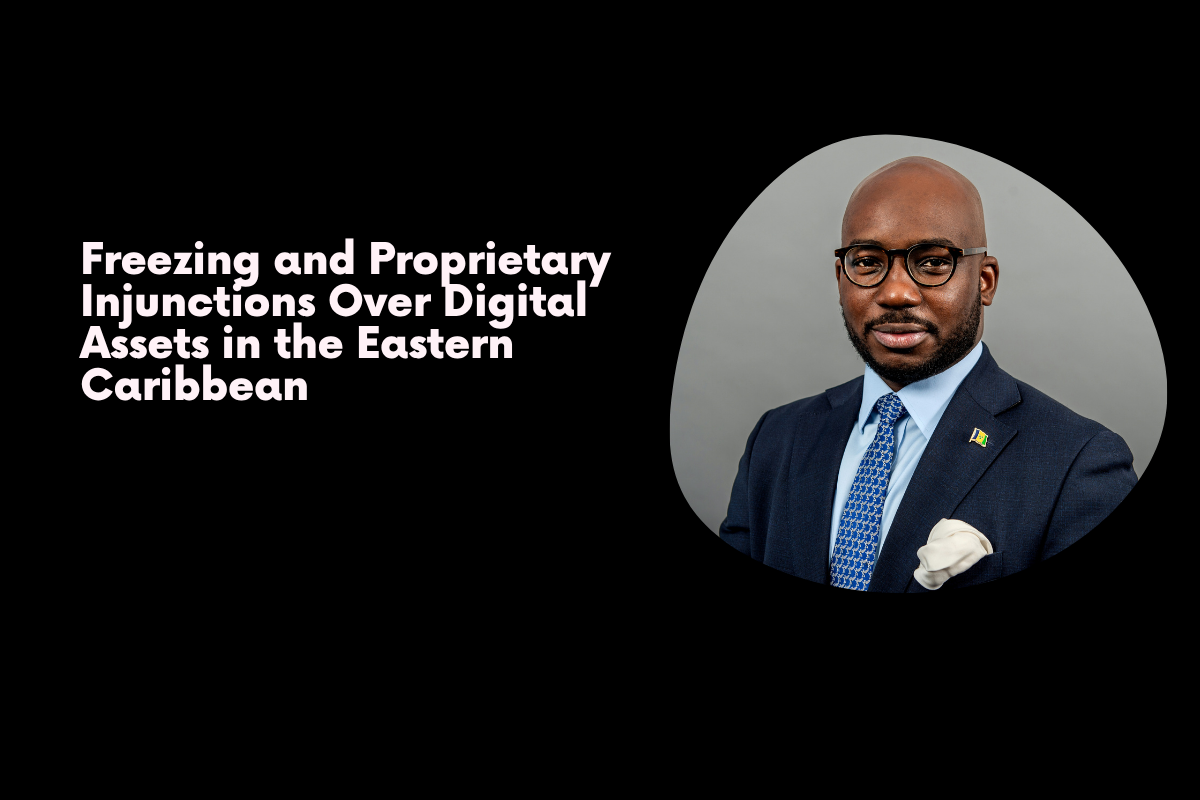
In this Q&A, Mikhail A.X. Charles — a barrister at 5 Pump Court, London, and Of Counsel to Baptiste & Co. in Kingstown, St Vincent and the Grenadines, admitted across most of the Eastern Caribbean, Barbados and Guyana and listed by Chambers and Partners for SVG — walks through how these remedies work in practice: why courts follow people rather than tokens across jurisdictions, how exchange disclosure orders turn a frozen wallet into a named defendant, and what victims need to get right procedurally before assets move into self-custody or decentralised bridges for good.
Crypto Law Summit runs live webinar sessions with practitioners from across the digital asset legal space throughout the year, covering the regulatory questions founders are actually facing. Join us for the next session to ask questions directly.
Q: What makes freezing and proprietary injunctions particularly effective (or challenging) when it comes to recovering digital assets in the Eastern Caribbean?
A freezing order is not a seizure. It is a personal order directed at the respondent — and, once they have notice, at third parties within the court's reach — not to deal with assets. It works because breach is contempt of court, and because the people who actually hold digital assets, increasingly centralised exchanges, will not knowingly assist a breach. That distinction explains both the power and the limits of the remedy.
Why it works here
The machinery is modern and uniform. The Eastern Caribbean Supreme Court serves nine member states and territories under one set of Civil Procedure Rules (Revised Edition 2023). Part 17 empowers the High Court to grant proprietary and non-proprietary (Mareva-type) freezing orders, asset-disclosure orders and search orders, and Practice Direction No. 4 of 2023 prescribes a standard-form freezing order — penal notice, sworn asset disclosure within days, third-party and worldwide provisos — so a judge in Kingstown, Castries or Road Town works from the same template. Urgent applications can be heard before a claim is issued, on paper or remotely.
The regional case law is unusually deep, largely thanks to the BVI. Broad Idea International v Convoy Collateral [2021] UKPC 24 and the Eastern Caribbean Court of Appeal's decision in Multibank FX International v Von Der Heydt Invest (2023) confirm that an applicant need not yet have a cause of action it can immediately institute — it is enough that proceedings will be brought, here or abroad — and that the threshold is a good arguable case, meaning more than barely capable of serious argument, not a probability of success.
Cryptoassets are property. Eastern Caribbean courts apply the common law and treat English authority as highly persuasive. AA v Persons Unknown, Tulip Trading v van der Laan and D'Aloia v Persons Unknown each treat cryptoassets as property, D'Aloia confirms that they can be held on trust and followed or traced, and the Property (Digital Assets etc) Act 2025 has removed the last doctrinal objection in England. That opens the door to the proprietary injunction, which — unlike a Mareva — needs no proof of a risk of dissipation, only an arguable case that specific assets are beneficially the applicant's. The public ledger lets those assets be defined with a precision no bank-fraud claimant ever had: by address, by transaction hash, and by their traceable proceeds.
And the platforms are often here. St Vincent and the Grenadines LLCs and BVI business companies are ubiquitous in the sector. Where the operator is incorporated in the jurisdiction, in personam jurisdiction is beyond argument, service can be effected on the registered agent, and the corporate defendant anchors the joinder of foreign individuals and exchanges. In SVG the Virtual Asset Business Act 2022 — in force since 31 May 2025, with new applications paused by the Financial Services Authority since 1 September 2026 — adds a regulatory overlay, and the FSA's register is the first place to look.
Why it is hard
Full and frank disclosure is the Achilles heel. An order obtained without notice is re-examined on the return date, and the Eastern Caribbean Court of Appeal in Addari v Addari made clear that discharge for non-disclosure, while discretionary, is very much on the table. Crypto cases tempt over-confident presentation: analytics that label every movement between an exchange's wallets as dissipation when it may be routine omnibus custody; the platform's own terms permitting compliance holds; the applicant's own earlier withdrawals. All of it must be volunteered, and the duty continues after the order is made.
Tracing is harder than the ledger makes it look. Tokens entering an omnibus exchange wallet are mixed, and D'Aloia is the cautionary tale: the claimant proved the fraud but lost against the exchange because the evidence could not follow the specific tokens into the specific account. The proprietary claim itself may be contested — a deposit on a custodial platform may create a debt rather than a trust — and that question will not be resolved at the interim stage.
Then the cross-undertaking. Freezing an exchange's operational wallets, or a volatile token during a market move, generates real loss for which the applicant is liable if the order should not have been made, and the court can require the undertaking to be fortified. Persons unknown can be sued, but an order addressed to a wallet nobody admits to controlling has evidential rather than preservative value: its bite is felt at the exchange, not on-chain. And outside the BVI's dedicated Commercial Court or the Saint Lucian Commercial Court, listing pressure means return dates can move; the order continues in the meantime, and so does the exposure.
Q: How do courts in the region approach cross-border enforcement when digital assets have moved through multiple wallets or jurisdictions?
Pragmatically, and by following people rather than tokens.
An Eastern Caribbean freezing order is not self-executing in Seychelles, Dubai, Seoul or Panama. It binds the respondent personally wherever the assets are, and it binds third parties within the jurisdiction who have notice. For assets abroad, the standard-form order carries the familiar Babanaft-type proviso: foreign third parties are affected only to the extent a local court declares the order enforceable, and may comply with local law and local orders. Worldwide relief is available — the BVI court has been granting and policing such orders since at least Eastern Caribbean Industrial Corporation Berhad v Vela Financial Holdings (2005) — but the court is alive to oppression, requires the usual undertaking not to enforce abroad without permission (Derby v Weldon), and applies the Dadourian guidelines before giving that permission: a real prospect of assets in the foreign jurisdiction, evidence of dissipation, and satellite relief that goes no further than the domestic order.
The working approach is therefore layered.
- Identify the choke points. Multi-hop laundering almost always touches a centralised exchange, because the wrongdoer needs to cash out. Chain analysis is used to define the frozen assets by address and transaction, and to identify the first exchange deposit addresses.
- Get disclosure from the exchange, not just a freeze. Norwich Pharmacal and Bankers Trust orders against exchanges — served out of the jurisdiction, with the court's permission, by email or other alternative means — produce the KYC file: identity documents, IP logs, linked accounts and the onward transaction history. LMN v Bitflyer confirms the court's willingness to make such orders against exchanges worldwide. In practice the larger platforms act on a sealed order, some insist on law-enforcement channels, and the applicant should expect to pay compliance costs and give undertakings as to use.
- Sue by description, then by name. Wrongdoers can be sued as "persons unknown" defined by conduct or by control of identified accounts — the AA v Persons Unknown and Fetch.ai model — with the important carve-out for bona fide purchasers for value. Once the KYC comes back, the persons unknown are named, joined and served, and mirror or ancillary relief is sought where they live. Byers v Saudi National Bank [2023] UKSC 51 is a reminder that a proprietary claim does not survive a transfer to a bona fide purchaser, and Piroozzadeh v Persons Unknown, where the court discharged an injunction against Binance, is a warning against treating an exchange that sweeps deposits into pooled wallets as a trustee of them.
- Anchor the jurisdiction. A defendant incorporated here is the gateway for foreign co-defendants as necessary or proper parties (AK Investment v Kyrgyz Mobil Tel [2011] UKPC 7), and English authority (Ion Science; Tulip Trading at first instance) treats a cryptoasset as situated where its owner is domiciled or resident, which supports gateways framed around property or damage within the jurisdiction.
- Convert preservation into recovery. A freezing order preserves; it does not return. Recovery comes from judgment — summary judgment is realistic where the ledger evidence is clear — a mandatory order for transfer to a court-controlled wallet, receivership, or settlement, followed by recognition of the judgment wherever the defendants or the assets are.
The limits are equally practical. Once assets go into self-custody, privacy protocols or decentralised bridges, the civil route slows dramatically. The order's value then becomes evidential: dealing with assets after service is contempt, and the court's response — unless orders, strike-out, debarring the respondent from applying to discharge — can decide the case without anyone ever finding the coins.
Q: What should victims of crypto fraud or theft know about pursuing injunctive relief before assets disappear entirely?
Five things.
- Speed matters; preparation matters more. The court will hear a genuinely urgent application within hours, before a claim form is issued, on paper or remotely: the Practice Direction allows the application, affidavit evidence and a draft order to be filed as little as two hours before the hearing, supported by a certificate of urgency. But the evidence must still do the work — a good arguable case; the specific assets identified (for crypto, wallet addresses and transaction hashes, not a narrative); facts showing a real risk of dissipation; why notice was not given; the defences the respondent is likely to run; and any fact that might lead the court to refuse relief. Preserve everything at once: transaction records, platform correspondence, terms and conditions, screenshots of balances and the trail of any compliance requests. The affidavit is written from those documents, and you will be held to it.
- Delay is fatal twice over. It erodes the risk-of-dissipation case, and it undermines the justification for proceeding without notice, which is permitted only where giving notice would enable the respondent to defeat the order or where there was literally no time. An unjustified without-notice application is itself a ground for discharge. Decide early whether a platform's internal process is going to resolve matters; if not, take advice before the trail goes cold.
- You are asking for a privilege, and the price is candour. Everything material — including what is bad for you — must be disclosed: your own earlier withdrawals, the platform's contractual right to impose compliance holds, the innocent explanation for on-chain movements, the source of your funds, any prior dispute, and the existence (though not the content) of without-prejudice exchanges. The duty extends to your lawyers, to points of law and to the form of the order, and it continues after the order is made. Non-disclosure exposed on the return date can cost you the order, the costs and damages under your cross-undertaking — aggravated where the concealment was deliberate (Al-Rawas v Pegasus Energy).
- Know what you are freezing and what you are promising. A proprietary injunction over identified tokens is the sharper tool because it needs no proof of dissipation risk, but its foundation is your beneficial ownership of those specific assets, and a deposit on a custodial platform may on analysis create a debt rather than a trust. A Mareva over the respondent's general assets reaches further but requires cogent evidence of a propensity to dissipate, not merely the ability to. Both come with a cross-undertaking in damages, the court may require it to be fortified, and freezing an operating business or a volatile token is a genuine liability if you turn out to be wrong.
- The order is the beginning, not the end. It preserves and it compels disclosure; it does not return assets. What follows is exchange disclosure, joining the people the KYC identifies, and either judgment or a negotiated exit. Run the parallel tracks — a report to the FSA under the Virtual Asset Business Act if the platform is in SVG, and to law enforcement, since some exchanges act only on official requests — but do not wait for them. And instruct local counsel from the outset: service, listing, costs and rights of audience are governed by local rules, and an application prepared abroad still has to be made, served and defended in the Eastern Caribbean.
About the Author
Mikhail A.X. Charles is a barrister at 5 Pump Court, London, and Of Counsel to Baptiste & Co. Law Firm Inc. in Kingstown, St Vincent and the Grenadines. Called and practising in England and Wales with an active civil / commercial practice before the County and High Courts in England and in most Eastern Caribbean jurisdictions, and listed by Chambers and Partners for SVG, he usually appears before the Eastern Caribbean Supreme Court (High Court or Court of Appeal) in freezing-order, exchange-disclosure and digital-asset disputes — for claimants and for platforms — and has conducted matters to the Privy Council. He is also admitted before the ADGM Courts in Abu Dhabi and the Astana International Financial Centre and is an accredited civil and commercial mediator.
LinkedIn: www.linkedin.com/in/mikhailcharles