What Separating Parents Get Wrong About Custody: A Q&A with JoAnna Smith
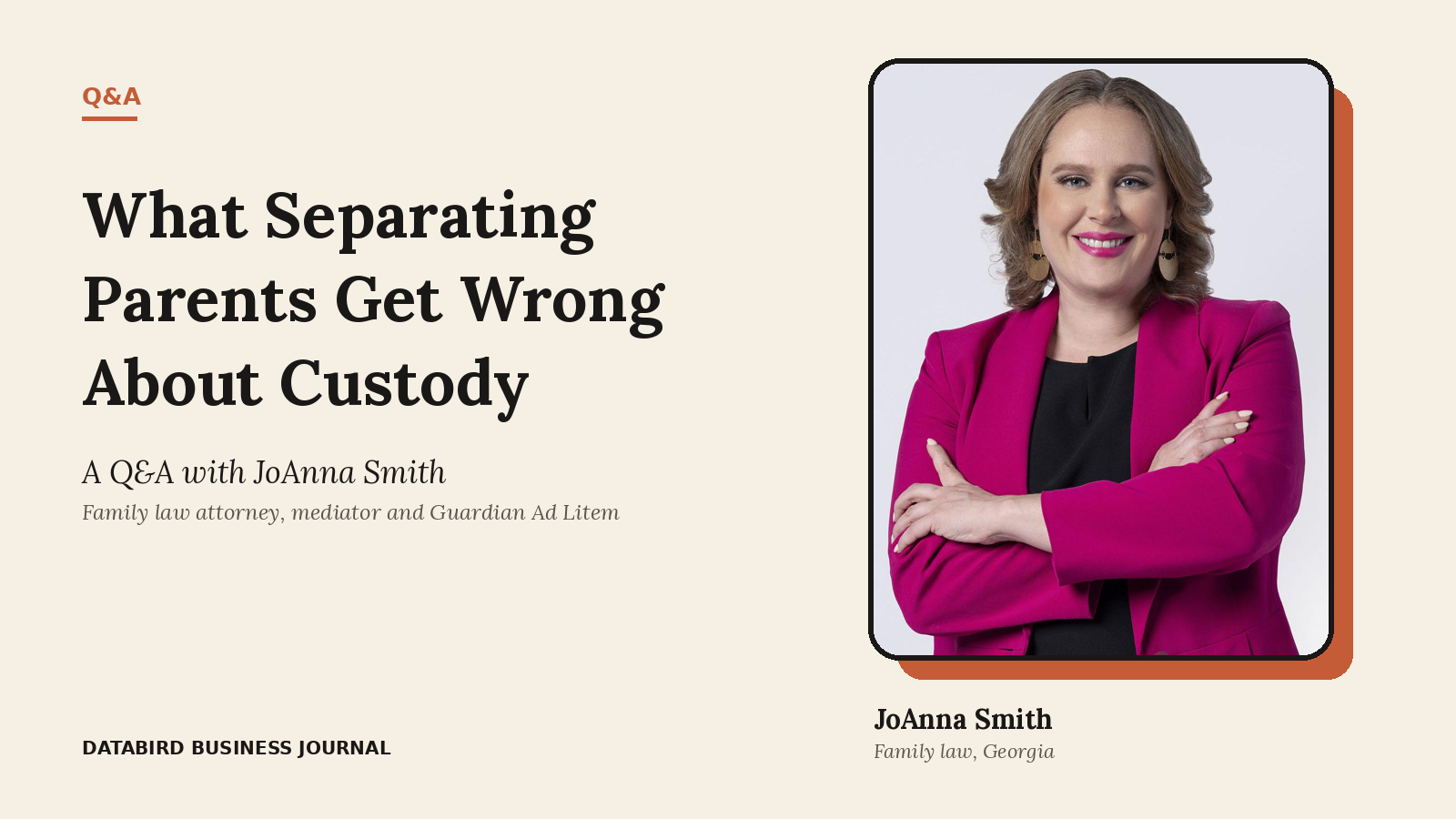
JoAnna Smith, a Georgia family law attorney and certified mediator, on what separating parents misjudge about custody, how mediation changes the process, and the one thing to do early to protect children.

Separation is one of the most stressful stretches a family goes through, and many parents enter it with ideas about custody that no longer match how courts handle it. Assumptions about who gets primary custody, or that a dispute has to become a courtroom fight, often shape early decisions before a parent has spoken to a lawyer.
In this Q&A, JoAnna Smith, a Georgia family law attorney, explains what separating parents most often misjudge when they first come to her. She covers why joint custody and 50/50 plans are becoming more common, how professionals such as a Guardian Ad Litem, a custody evaluator or a parent coordinator can keep a difficult case calm, and how mediation differs from going to court.
JoAnna is a certified domestic relations mediator and arbitrator and an experienced Guardian Ad Litem. She also shares the one thing she would tell any parent to do early on to protect their child through a separation.
Know a woman leader doing incredible work? The Founded by Women Awards are open for entries. Showcase your story, gain visibility and connect with a community of leaders. 👉 foundedbywomen.org/awards
Disclaimer: The answers below are shared for general informational purposes only. They are not intended to serve as legal advice, and readers should consult with a lawyer about their own situation.
Q: What do separating parents most often misjudge about custody when they first come to you?
Separating parents often assume that one parent will get primary custody and the other will just have visitation. Courts are leaning more and more towards joint custody and 50/50 plans. And we are seeing more and more dads having 50/50 custody. Another misconception is that custody disputes need to be ugly battles. Even when parties disagree about custody and visitation, or when there are safety or other major concerns, we have the ability to keep things calm by engaging professionals like a Guardian Ad Litem, custody evaluator, or parent coordinators to help focus on the best interest of the children and avoid a scorched-earth approach.
Q: How does mediation change the way a custody dispute plays out compared with going to court?
In mediation, the focus is on problem-solving rather than trying to tear the other party down. This can help preserve the co-parent relationship and keep things from escalating. Additionally, mediation is a private process. You don’t have to involve witnesses or otherwise air your dirty laundry like you would going to court. Most importantly, mediation allows the parties to decide their own future, rather than leaving it in the hands of the judge. The parties can create custom parenting plans that reflect their individual circumstances and the needs of their children rather than the cookie cutter approach that may occur at court.
Q: If a parent could do one thing early on to protect their child through a separation, what would you tell them?
Keep the kids out of it! Don’t talk badly about the other party, use the children as messengers, or share too much about the legal case. Kids may have questions but keep the answers positive and age appropriate. Engage the help of a counselor or your attorney if the other side is involving the children too much or if you need help on how to talk to the kids.
About the Author
JoAnna Smith is a Georgia family law attorney who is passionate about helping Georgians successfully navigate their family law issues from divorce, custody, and child support to mediation, protective orders, and name changes. She particularly loves working with the LGBTQ++ community, people exploring alternative family structures, and parents with kids with disabilities. She is a certified domestic relations mediator and arbitrator and experienced Guardian Ad Litem.
This Q&A is not intended to serve as legal advice. Readers should consult with a lawyer.