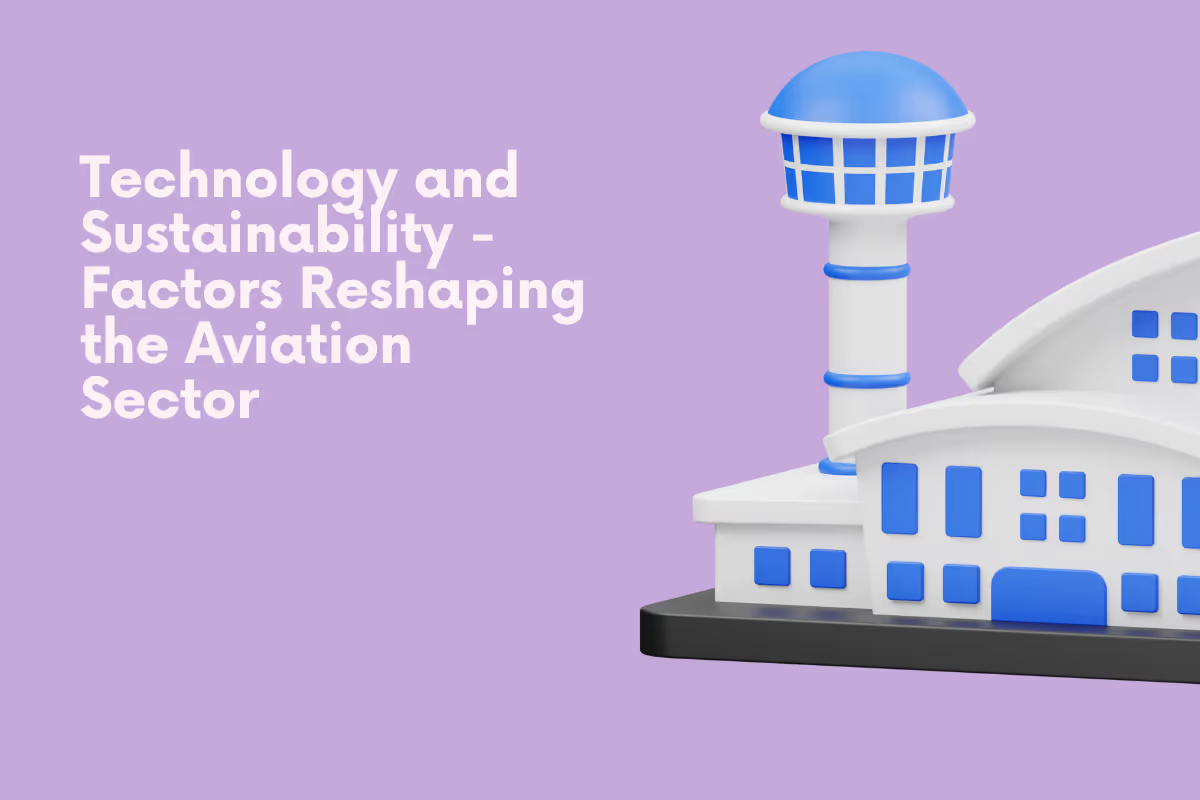
Technology and Sustainability - Factors Reshaping the Aviation Sector
Aviation is being reshaped by two forces that are often discussed separately, but in practice are deeply connected
Aviation is being reshaped by two forces that are often discussed separately, but in practice are deeply connected: technology and sustainability. Technology is changing how airlines and airports operate, how passengers move through journeys, and how decisions are made under pressure. Sustainability is changing expectations, compliance requirements, investment priorities, and, increasingly, the cost and design of operations. Together, these forces are shifting what “good” looks like in aviation, and they are raising the baseline for competitiveness.
It is easy to describe these changes in big, abstract terms. The reality is more practical. The sector is adjusting to how new tools alter daily workflows, how sustainability requirements affect procurement and reporting, and how customers interpret the credibility of climate and efficiency claims. Some changes are visible to passengers, like better self-service and real-time updates. Others are invisible but just as important, like predictive maintenance, smarter disruption management, and more disciplined sustainability data governance.
The key point is that the winners will not be those who chase every new trend. They will be those who integrate technology and sustainability into a coherent operating model, and who deliver reliable performance while adapting to tighter constraints and higher scrutiny.
Technology is changing the definition of operational excellence
Operational excellence in aviation has always involved punctuality, safety, and efficient use of assets. What technology is adding is speed and precision in decision-making. The best operators are moving from reactive management to proactive management, where issues are spotted earlier and handled before they cascade.
Several technology themes are particularly influential:
- Predictive tools for operational risk that combine weather, airspace, and schedule data to anticipate disruption patterns.
- Resource optimisation for gates, stands, crews, and ground handling teams, improving reliability in peak periods.
- Maintenance analytics that reduce unplanned events and protect fleet availability.
- Integrated communications that improve coordination between airlines, airports, and partners during irregular operations.
These capabilities can drive meaningful improvements, but only when they are embedded into real workflows. A dashboard that looks impressive is not enough. The value comes when the tool changes how a decision is made and when a decision is made. In many organisations, the biggest leap is not adopting technology, but redesigning processes and responsibilities to use it properly.
Digital passenger journeys are becoming the baseline expectation
Passengers increasingly expect aviation experiences to match the convenience they get in other parts of life. They want transparency and control. When plans change, they want clarity and quick options. When things run smoothly, they want less friction.
Digital improvements tend to concentrate in a few areas:
- Self-service rebooking and changes that reduce the pressure on contact centres during disruption.
- Real-time notifications that feel accurate and useful rather than generic and delayed.
- Better baggage visibility to reduce uncertainty and complaints.
- Smoother airport flows through improved queue management and information design.
From a business perspective, the digital journey is not just a customer experience initiative. It is an operational resilience lever. When disruption occurs, effective self-service and clear communications reduce congestion, reduce staff overload, and speed up recovery. In that way, technology that improves passenger experience can also improve capacity and cost control.
Cyber resilience is now part of sector resilience
As aviation becomes more digital and interconnected, cyber resilience becomes inseparable from operational resilience. The passenger journey spans airlines, airports, baggage systems, payment systems, and, in many cases, government interfaces. Any weak link can affect service continuity.
Cyber resilience in this context is not just security controls. It is also:
- Access discipline across partners and contractors.
- Monitoring and incident response that is aligned to operational realities.
- Business continuity planning that assumes systems will occasionally fail.
- Data governance that protects sensitive information and reduces leakage risk.
Technology leaders in aviation are increasingly expected to speak the language of operational risk. The question is not only “Is the system secure?” but also “If a system is compromised, how quickly can we restore service and prevent cascading impacts?”
Sustainability is reshaping the cost and credibility landscape
Sustainability is often framed as a long-term transition, but many of its impacts are immediate. Sustainability expectations influence procurement choices, investor conversations, partnership decisions, and customer perceptions. The sector is also facing increased scrutiny over the credibility of claims and the quality of supporting evidence.
Two sustainability dynamics are particularly important for aviation leaders:
- Cost volatility and supply uncertainty as cleaner energy sources and lower-carbon options scale unevenly.
- Compliance and assurance expectations that demand better data, stronger governance, and clearer documentation of methodologies.
These dynamics push organisations to treat sustainability not as a marketing theme, but as a managed capability. That capability includes measurement, controls, decision-making, and operational integration. It also includes clear communication that avoids overstatement and aligns with what can be evidenced.
Technology and sustainability are converging through data
The point where technology and sustainability meet most directly is data. Sustainability reporting requires consistent, traceable information. Operational technology generates large volumes of data that can support efficiency and emissions reduction. When these data flows remain fragmented, both operational improvement and sustainability compliance become harder.
Organisations that treat data as a strategic asset can unlock benefits in multiple directions:
- Better route and fuel optimisation through improved planning data, reducing cost and emissions.
- More accurate sustainability reporting through integrated systems and consistent definitions.
- Faster decision-making because teams operate from a shared view of reality.
- Higher trust in outputs, because governance reduces inconsistency and rework.
This is where many programmes succeed or fail. Without a data foundation, technology initiatives become isolated and hard to scale. Sustainability compliance becomes labour intensive and fragile. With a data foundation, both become more manageable and more credible.
Ground operations are an underrated lever for both efficiency and emissions
When people think about aviation sustainability, they often focus on flight emissions. Ground operations also matter, and they can be influenced more quickly through process redesign and equipment choices. Airports and airlines are increasingly examining how they can reduce inefficiency at gates, stands, and terminals.
Examples of ground-side improvements include:
- Reducing unnecessary taxi time through better stand planning and coordination.
- Improving turnaround discipline to avoid idling and late pushes that disrupt the network.
- Modernising ground support equipment with a focus on reliability and lower emissions.
- Optimising baggage handling to reduce rework and improve punctuality.
These improvements can deliver multiple benefits at once: better reliability, lower operational cost, reduced emissions, and improved passenger experience. They also tend to be practical, which helps organisations build momentum.
Sustainability is increasing the importance of credible governance
One of the most significant shifts in the sustainability landscape is the move from broad ambition to credible delivery and evidence. Aviation organisations face growing expectations to demonstrate the basis for their claims and to report progress consistently.
Credible governance usually includes:
- Clear ownership of sustainability data across functions, including finance, operations, procurement, and risk.
- Documented methodologies for how metrics are calculated and what assumptions are used.
- Controls and approvals to prevent inconsistent reporting and unsupported statements.
- Traceability so reported figures can be linked back to source evidence.
This kind of governance can feel heavy, but it has a practical benefit. It reduces the risk of rework, reputational damage, and confusion across stakeholders. It also supports better internal decision-making. When sustainability information is reliable, it can inform procurement, operations, and capital planning more effectively.
Innovation must be balanced with operability
Aviation is full of innovation opportunities, from automation to new mobility concepts. The challenge is that aviation is also safety critical and reliability driven. The best innovations are those that can be operated consistently, supported by the workforce, and integrated into a complex ecosystem of partners.
Leaders are increasingly using a pragmatic innovation approach:
- Pilot with purpose by choosing pilots that solve a specific operational or customer problem.
- Scale through standardisation by designing processes that can be reused across locations and teams.
- Measure operational impact including reliability, recovery time, and employee workload, not just novelty.
- Design for compliance so security, privacy, and sustainability requirements are considered early.
This approach reduces the risk of “innovation theatre”, where pilots produce headlines but not durable value. It also helps organisations build a culture where innovation is part of delivery, not separate from it.
Workforce capability sits underneath every transformation plan
Technology and sustainability programmes often stumble for the same reason: the workforce is not set up to absorb change. New tools change how work is done. New sustainability requirements change what information is needed and how it must be controlled. If training, leadership, and day-to-day rhythms do not support the change, adoption suffers.
Leading organisations invest in capability building alongside technology investment. That includes:
- Training that is role-specific and tied to real tasks, not generic awareness sessions.
- Clear ways of working so teams know how decisions are made and who owns what.
- Manager enablement because managers often determine whether tools are used well or ignored.
- Support for change fatigue by sequencing initiatives realistically and measuring the impact on workload.
Workforce capability is also a sustainability issue. If sustainability reporting is built on manual effort and overstretched teams, it becomes brittle. If it is built into systems and supported by clear ownership, it becomes sustainable in the practical sense of being maintainable.
What aviation leaders are prioritising now
Across the sector, technology and sustainability priorities are converging into a few recurring themes:
- Reliability and recovery as core measures of operational performance, supported by better data and decision tools.
- Digitised passenger journeys that reduce friction and improve disruption handling.
- Data and governance foundations to support both operational improvement and sustainability credibility.
- Pragmatic efficiency including ground operations improvements and smarter planning that reduce waste and cost.
- Risk resilience including cyber readiness and ecosystem coordination.
For a broad overview of how these themes are being grouped and discussed across future-focused aviation content, this hub of insights on the aviation sector is a useful reference point for topic coverage and framing.
Technology and sustainability are not separate projects
The most important shift underway is that technology and sustainability are no longer treated as separate transformation streams. They increasingly share the same foundations: data, governance, operational integration, and workforce capability. When leaders view them together, they can design investments that compound benefits rather than compete for attention.
Over the next few years, aviation organisations will be judged less on the number of initiatives they announce and more on the consistency of outcomes they deliver. Reliable operations. Clear communication. Credible sustainability progress. Practical efficiency gains. The leaders who make those outcomes repeatable will be the ones reshaping the sector, regardless of what the next headline trend happens to be.