
.png)
A modest activity can create a substantial planning assignment. A useful event budget makes preparation, hosting, and cleanup visible alongside purchases, so a simple idea stays simple for the person delivering it.
The proposed gathering requires no tickets and uses supplies already in the office. On paper, the expense is almost negligible. Someone still has to choose the activity, confirm the room, explain the plan, find the supplies, and put everything away. If those jobs remain unnamed, the budget has omitted work rather than removed it.
For a manager approving an informal adult team gathering, the first decision should be how much organizing work the occasion deserves. That decision makes it easier to reject unnecessary extras before a capable colleague quietly absorbs them. It also gives a low-cost plan a fair comparison with a more expensive option that requires less preparation.
Separate the Activity From Its Supporting Work
Begin with the smallest complete description of the occasion: a short optional gathering in an available room, using an activity that participants can understand quickly. Then list what must happen for that description to become true. The list should include the work before and after the visible event.
A written activity suggestion from Palaura can reduce the search for an idea. Its friends planner provides plans with materials and rough costs. Those outputs are useful starting information, but they do not reserve the room, gather the materials, or arrange someone to host. The remaining work belongs in the organization's own plan.
When adapting a Palaura suggestion, separate selection from delivery. Finding an appealing activity may take little time while preparing it for a particular group takes much longer. An idea involving ordinary household objects might still require someone to locate enough usable examples, transport them, and check that the chosen room has somewhere to put them.
Ask the likely organizer to describe that work before approving the event. A manager looking only at the finished activity may not notice that the room is used immediately beforehand or that supplies are stored elsewhere. These are ordinary operational details. They become problems when the plan assumes a person will solve them without time or help.
Estimate Tasks Before Adding Decorative Extras
An estimate does not need to be precise to be useful. Start with a few named tasks and a reasonable allowance for each. Label uncertain items so the organizer can check them. Avoid presenting a total as settled while a major question, such as access to the room, remains unresolved.
For a hypothetical gathering, an organizer might allow twenty minutes to choose and adapt an activity, fifteen minutes to collect supplies, and fifteen minutes to prepare and restore the room. That is fifty minutes of work outside the gathering itself. These are illustrative allowances, not measured averages; the value lies in making the separate jobs discussable. Also distinguish elapsed time from combined effort. Two people spending fifteen minutes on setup contribute thirty minutes of staff time, even if the room is ready sooner. A helper may remove a bottleneck without reducing the total work.
Task | Person responsible | Point at which the task is finished |
|---|---|---|
Confirm room access | Named organizer | Access and timing are confirmed |
Collect existing supplies | Named helper | Required items are together and usable |
Explain the activity | Agreed host | Participants know how to begin |
Restore the room | Agreed pair | Materials are returned and the room is ready |
A Palaura materials list can help identify the supply task, but it cannot tell you how long retrieval will take in your workplace. Check what is actually on hand. If finding an item takes more effort than changing the activity, changing the activity may be the sensible choice.
Decorative extras should face the same question. Printed cards, coordinated snacks, and a custom presentation each create another job. Some may be worth doing. What matters is that the manager chooses them with their preparation visible, instead of calling them small additions because their purchase price is low.
Reduce Scope Before Asking for More Effort
When the estimate exceeds the time available, simplify the event before seeking a more industrious organizer. Remove a stage, use fewer materials, or select an activity that can begin with a spoken explanation. Reducing coordination can preserve the point of the gathering without making one person's workload the hidden subsidy.
A plan from Palaura — Alternative to Speed Dating Apps can offer an alternative when the first idea proves awkward to deliver. Compare the remaining preparation, not just the suggested spend. Two activities with similar material costs can differ considerably in how much setup, explanation, and restoration they require in a particular room.
Suppose the original idea requires moving tables and distributing individual kits. Another uses the room as it stands and shared materials already nearby. The second may be easier to repeat even if the first produces more attractive photographs. That is a choice about the occasion's purpose, not a judgment that elaborate events are always wasteful.
Protect the useful parts. If the gathering is meant to give colleagues an informal break, a lengthy introduction and several competitive stages may add little. If the purpose is to try a craft together, removing the shared work would defeat the point. Cut the tasks that do not contribute enough to the stated purpose rather than reducing everything equally.
Once scope changes, update the invitation and the organizer's task list. Otherwise the old promise survives while the resources supporting it disappear. A simpler plan should feel complete to participants. It should not require the host to apologize throughout the event for features that were quietly dropped.
Reserve Time to Finish the Work Afterward
Put restoration time on the plan before the event begins. If the room must be ready for another use at a fixed time, work backward from that point. The activity needs to end early enough for materials to be collected and furniture returned. A session that fills the entire booking leaves the final task without a place to happen.
Give that final task an owner and enough help. Do not assume that the person who explained the game will also stay to sort every item. If two colleagues agree to restore the room, tell them where the materials belong and what can remain in place. Otherwise a shared responsibility can become another task for the organizer to supervise.
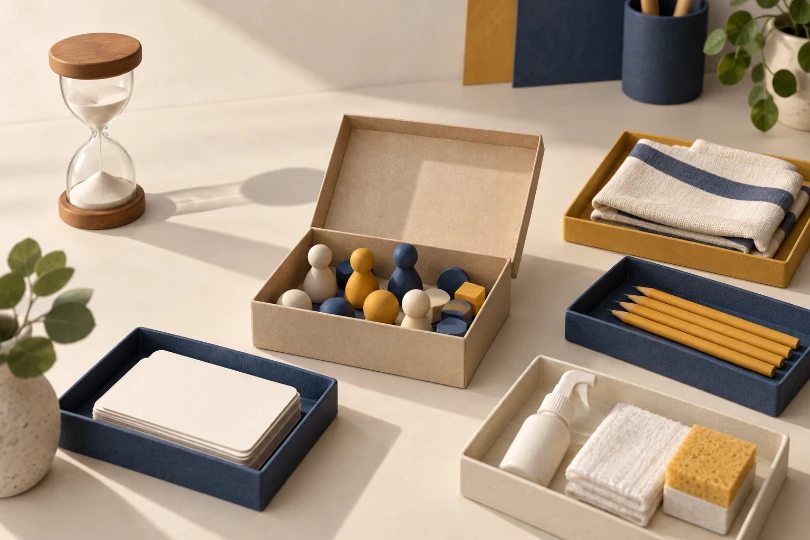
If the Palaura activity is worth repeating, keep its reusable materials together after checking their condition. Note anything that needs replacing before another session. A ready box can save collection work next time, but only if someone finishes assembling it now; leaving loose items on a desk merely postpones the job.
After the event, ask which task took longer than expected and whether the activity is worth repeating under the same conditions. Keep the answer short enough to use. A note that the materials were easy to find but the room took time to restore is more useful for the next decision than a general statement that the event went well.
Approve the next gathering with that information in view. The relevant cost includes what the team bought and what someone had to do. Making both visible allows a small event to remain a small assignment, rather than becoming another responsibility assigned to whoever is most likely to carry it through.



.png)