
As more investment funds add digital assets to their strategies, governance frameworks are often struggling to keep up. Valuation of thinly traded tokens, custody and wallet controls, transaction monitoring and counterparty due diligence all raise questions that frameworks built for traditional assets were never designed to answer, and offering documents frequently still describe the fund as it looked before the digital-asset allocation.
At the same time, AI tools are entering the boardroom, promising faster document review, better-prepared board packs and fewer missed regulatory deadlines. That raises a harder question for directors: what can be safely handed over to technology, and what remains a matter of human judgment and fiduciary duty.
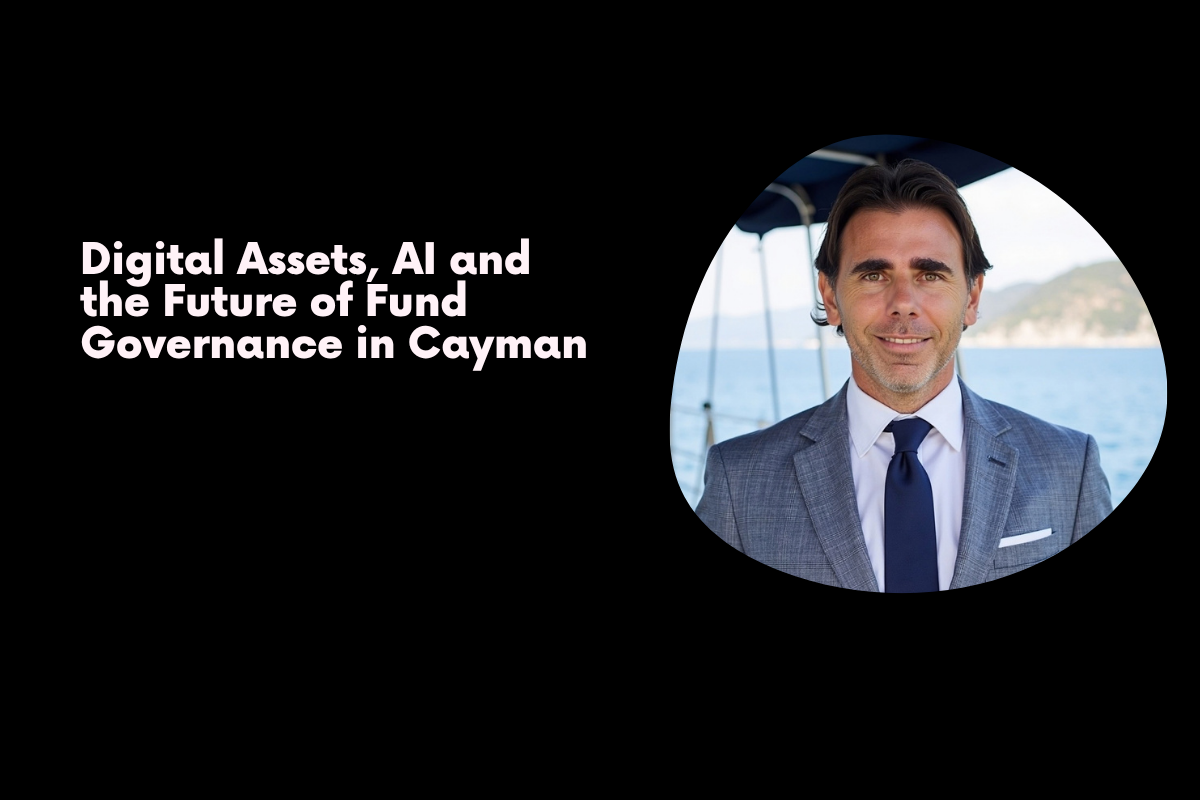
In this interview, Martin Laufer, an independent director and AML officer for CIMA-regulated funds, shares where governance gaps most often surface when funds move into digital assets, how AI is changing what boards can oversee versus delegate, and why bringing in a genuinely independent director early is one of the most valuable decisions a fund manager can make.
Crypto Law Summit runs live webinar sessions with practitioners from across the digital asset legal space throughout the year, covering the regulatory questions founders are actually facing. Join us for the next session to ask questions directly.
Q: As an independent director and AML officer for CIMA-regulated funds, what governance gaps do you see most often when funds start incorporating digital assets into their strategy?
The most common gap I see is that in some cases the governance framework hasn't evolved at the same pace as the investment strategy. A fund may have a solid framework for traditional assets, but introducing digital assets brings additional considerations around valuation, custody, wallet controls, transaction monitoring, counterparty due diligence and the use of exchanges or other platforms.
From an AML perspective, the board needs to understand where those risks sit and make sure responsibilities are clearly allocated between the board, investment manager, AML officers and service providers. The board needs enough information to exercise meaningful oversight and ensure that the controls remain proportionate to the fund's strategy.
Where issues tend to surface first in practice is valuation. Illiquid or thinly-traded tokens, or values derived from a DeFi protocol rather than an active market, need their own verification policy. Disclosure often lags the same way, as offering documents and risk factors may still describe the fund as it existed before the digital-asset allocation, leaving a gap between what is disclosed to investors and what is actually happening operationally.
Q: Daymer Group has been expanding into Latin America and using AI-enabled tools like BoardPilot for board support - how is technology changing what boards can reasonably oversee versus delegate?
On the LATAM expansion:
LATAM is a natural extension for me personally, as well as strategically for Daymer. My background, fund administration, private wealth and fund governance experience, combined with fluency in Spanish and a genuine cultural connection to the region, means I can sit across the table from a LATAM manager or financial institution and actually understand the context they're operating in, not just the Cayman side of the transaction. That translates into practical help: guiding them through structuring the right Cayman vehicle for their strategy, selecting service providers who are both reliable and appropriately priced for the size of the mandate, and staying engaged through the life of the fund.
On technology:
BoardPilot is a good example of where we've put this to work in practice. Fund governance is under more scrutiny than ever. Every entity in the structure, the fund itself, its investment manager, SPCs, SPVs and the entities beneath them, needs certainty that every process, deadline and pack is accounted for, not assumed. BoardPilot keeps board meetings, documents and regulatory deadlines on track. It’s built by a team that includes sitting independent fund directors alongside technology leaders with backgrounds at major hedge funds, so every workflow reflects how governance actually runs across a fund structure. Every workflow reflects what fund governance actually needs, built from direct experience of what makes it run smoothly, and what causes it to fall behind.
It works alongside the tools clients already use, adding a zero-deployment layer purpose-built for company secretary workflows across the fund structure.
What this means in practice is better quality information at board meetings, directors that have client information, key documents, service providers and key members of their clients management at their fingertips in seconds.
With regards to other new technologies - where I draw the line is between operational efficiency and judgment. AI is genuinely effective at automating repetitive administrative processes and controls and at helping digest large, complex documents quickly, provided the confidentiality tooling and procedures around it are right, which is not a small caveat. But the essence of a director's role, and the fiduciary duty behind it, doesn't get automated. If anything, I'd argue the director's role becomes more important, not less, as AI enters the picture, because someone has to ensure that when AI has informed an investment decision or process, there are actual policies in place, real people are exercising oversight, and those processes are being followed and are actually working, not just assumed to be.
That's very much where the industry conversation is heading and recent legal commentary on boards' own AI use makes the same point: a director's duty of care means being informed both through AI tools and about them, and AI-assisted materials still need the same governance discipline as any other input, i.e. approved tools, defined controls, review. Boards can delegate the task to AI; they can't delegate the oversight of it.
Q: What's one piece of advice you'd give fund managers navigating fiduciary duties across multiple offshore jurisdictions today?
If I had to give one piece of advice, it would be this: bring in a genuinely non-conflicted, independent director early. Not a box ticker, a person that will genuinely add value to the entity and its governance.
The real value is what it signals to investors, whether that's a family office writing a modest ticket or an institutional allocator running a full ODD process: that decisions aren't being made in a vacuum and ratified with no real oversight, that someone with no economic stake in the manager's success is actually questioning the process, asking tough questions, and that investor protections are more than language in an offering document.
About the Author
Martin Laufer is a Director and AMLCO/MLRO at Daymer Group, a boutique independent governance and fund services firm based in the Cayman Islands, with a presence in the UAE and UK. He provides independent directorship, fund governance, and AML/CFT compliance services to investment fund structures across Cayman, the US, and the BVI. Martin holds the CFA, CPA, TEP and CESGA designations and brings over 15 years of experience across BNY Mellon, Maples Group, CIBC and RBC.


.png)