Common SOC 2 Readiness Mistakes and How to Avoid Them
SOC 2 readiness problems often begin before the examination starts. Here is how to define scope, match the report type to customer demand, and keep controls running.
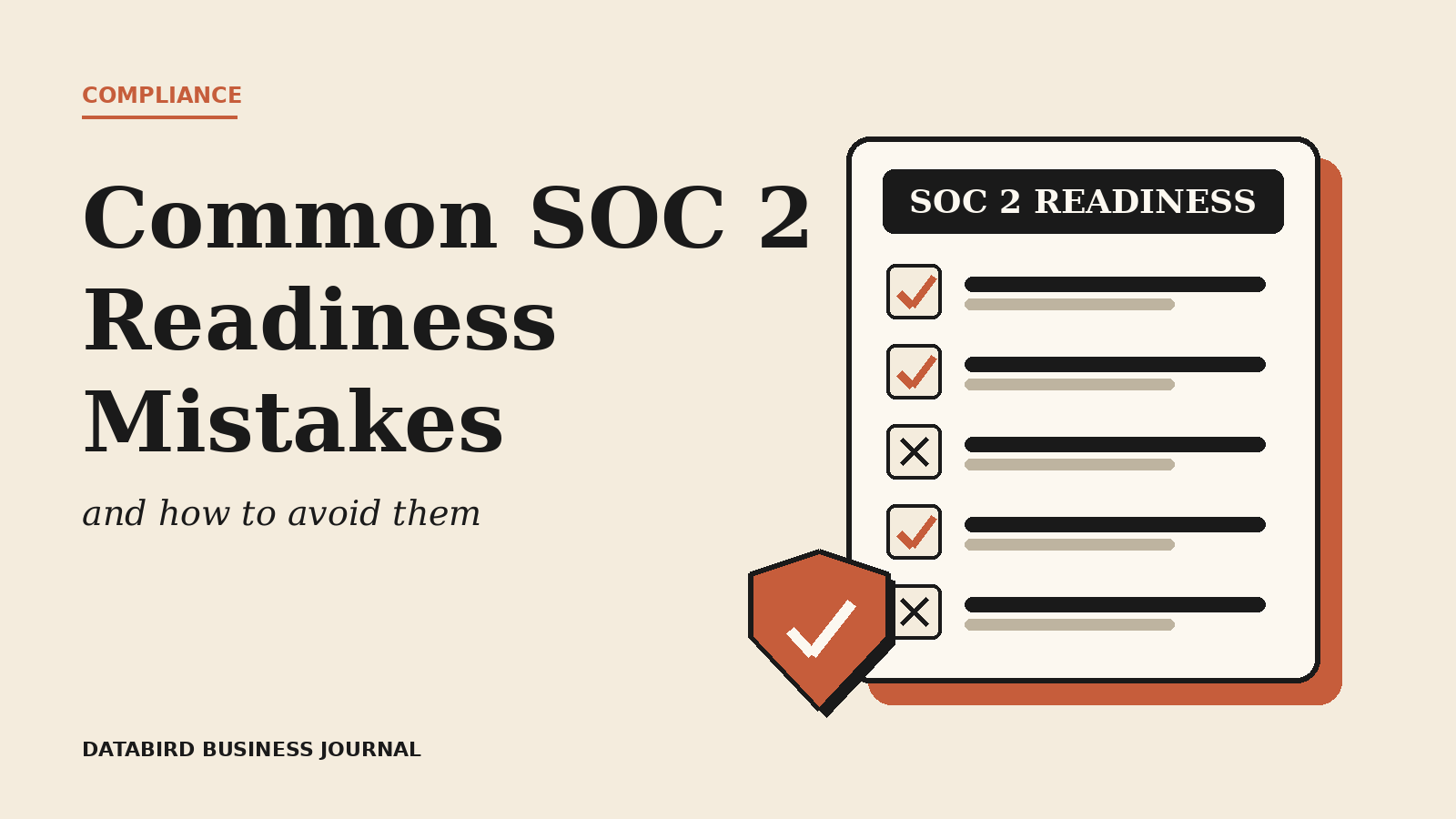
SOC 2 readiness problems often begin before the examination starts. Rushed planning, unclear scope, weak ownership, and controls that exist only on paper can leave teams unprepared. Readiness works best as a cycle of planning, gap analysis, remediation, and ongoing monitoring.
Define the system before doing anything else
The system description is where many readiness efforts go off track. It's the auditor's view of what's in scope: services, software, infrastructure, and data flows. If that description is vague, controls get mapped to the wrong things and evidence doesn't line up with the system being examined.
Another common error is treating SOC 2 as a security-only exercise. Security is always in scope, and the AICPA's Trust Services Criteria organize the common criteria into nine groups, labeled CC1 through CC9. Additional categories like availability, confidentiality, processing integrity, and privacy are selected based on customer commitments and service scope, not added by default. Firewalls and access controls matter, but change management and risk assessment often decide whether the control set holds.
Start with clear scoping. Talk to sales and product teams about what customers actually ask for in contracts and questionnaires. Then draw clear system boundaries and map each in-scope criterion to a specific control. Don't move forward until that map is complete.
Match the report type to customer demand
A Type 1 report looks at control design at a specified date. It answers whether controls were set up to meet the criteria at that point. A Type 2 report goes further and tests operating effectiveness over a period of time.
Companies mix these up and pay for it. A team picks Type 1 because it's faster, then learns key customers wanted Type 2. Or a team commits to Type 2 without the tickets, logs, access reviews, and approvals to show controls actually ran.
There's no universal pass or fail here, and SOC 2 is an examination and report, not a certification. Customers read the details and decide what matters to them. Ask what reports customers will accept before locking in a plan. Service contracts and security questionnaires usually spell out whether customers expect design coverage or proof over time, so review them before making a choice.
Get that answer in writing.
Run a readiness assessment before the formal audit
Walking into an examination without a dry run is a costly mistake. Gaps should surface before the independent auditor starts testing. A structured gap assessment finds those gaps early, while there's still time to fix them.
A good assessment checks the system description and which criteria are in scope, then tests whether controls have owners and proof. It ends with a clear remediation plan that names what to fix and who will fix it. Dates are tied to the planned audit period. A soc 2 checklist from IS Partners can provide a starting structure for scoping, gap analysis, documentation, and evidence collection. Adapt it to the system and planned report rather than treating it as a universal control list.
Don't treat findings as paperwork. Prioritize missing controls that affect multiple criteria, then close documentation gaps. Retest after fixes to see whether the controls work in practice.
Turn policies into controls people actually run
Policies alone don't demonstrate that controls are implemented. For Type 2, evidence must also support their operating effectiveness throughout the examination period.
This is where control ownership matters. One person can't run every control. Each control needs control owners who handle daily operation and save proof as part of the job. Without that, evidence has holes and no one knows how they formed. A solid control environment helps here, with clear reporting lines and accountability that make ownership stick.
Build evidence collection into normal work. Save access reviews when they're done, and link change tickets to their approvals. Policy acknowledgments belong somewhere they can be found when needed. These routine habits beat last-minute scrambles.
Test before the auditor does. Pull a sample of logs and tickets and ask whether they show who did what. If they don't, fix the process before testing begins.
Don't forget vendors and life after the report
If a hosting provider or other subservice organization handles part of the service, discuss its treatment with the examining CPA firm. Clarify which controls your organization operates and which belong to the provider. When reviewing the provider's SOC report, check the service scope, reporting period, exceptions, and responsibilities assigned to your organization. Outside readiness support can help with this work, while the examining firm must preserve its independence.
Complementary user entity controls need the same attention. These are tasks customers must do for controls to work, like customer-side access decisions and timely report reviews. Spell them out so customers aren't surprised during their own reviews.
Monitoring can't stop when the report is issued. Type 2 in particular depends on controls running steadily, not just during crunch time. Fold checks into weekly routines and monthly reviews so evidence continues to build as the work happens.
SOC 2 rewards steady execution, from defining scope and choosing the right report to rehearsing for the audit and keeping controls running afterward. Keep that work consistent so the examination becomes a review of normal operations.