10 Best Virtual Assistant Services: Pricing and Fit
Compare the best virtual assistant services by pricing, service model and ideal use case, from dedicated hourly plans to request-based help.

Two buyers can type the same search and mean different things. One founder needs ten hours a month for calendar and travel. Another executive team needs a full-time person across sales support and admin. They are not shopping in the same market, even though both are looking for the best virtual assistant services. Human virtual assistant services have become a real operating category. Future Market Insights projects the market at about USD 19.5 billion in 2025 and USD 55.4 billion by 2035, an 11.0% compound annual growth rate. Other estimates are smaller: Gaugius puts 2025 at $8.11 billion, while Wishup estimates $5.3 billion for 2025 and $6.5 billion for 2026. Those gaps come from different definitions of what counts as a human virtual assistant service. The useful takeaway is not the exact number. It is that support has split into three buying routes: hourly bundles, dedicated full-time staffing, and request-based task help. Match the model to your weekly workload before you compare brands.
Table of Contents
- 1. HireParalegals
- 2. Time Etc
- 3. BELAY
- 4. Prialto
- 5. Zirtual
- 6. Wing Assistant
- 7. Boldly
- 8. MyOutDesk
- 9. Delegated
- 10. Fancy Hands
- 11. WoodBows
- Service model, starting price and best-fit use case for each provider
- Matching a Provider to Your Actual Workload
1. HireParalegals
Law firms don't just need someone to triage a calendar. They need paralegals who understand court deadlines, discovery, and the specific practice area in front of them. HireParalegals is a specialized virtual legal assistant platform built for U.S. law firms. Pricing start at 8/hour all inclusive, no placement fees. The network includes more than 10,000 pre-vetted paralegals, legal assistants, junior attorneys, and other legal professionals, with an average of four-plus years of experience. The company says firms can reduce hiring time to 24 hours and cut payroll costs by up to 80% compared with a local hire. Those are strong claims, but the platform's focus is narrow enough that the numbers matter more than a general VA marketplace's conversion rate.
The matching flow is built around legal practice areas such as immigration, litigation, corporate, family law, and niche specialties.

How the screening works
HireParalegals runs candidates through a four-step process: sourcing, interviewing, background checks, and skills validation. That's a meaningful difference from a general assistant service, because legal work carries confidentiality and regulatory risk.
- Practice-area shortlists: Firms can review custom shortlists with video introductions and CVs, then interview candidates in their local timezone.
- Specialist coverage: The platform spans immigration, litigation, corporate, family law, and smaller niche practices.
- Human-plus-AI matching: It combines AI matching with human review, which helps speed sourcing without removing legal judgment.
- Payroll and compliance support: For Latin American hires, the service offers payroll management and compliance guidance, which matters if you want remote staff outside the U.S.
- Pricing starts at $8/hour all inclusive, no fees.
Practical rule: For legal work, ask whether the provider verifies practice-area experience and background checks before you share client files. A low-cost general VA is rarely the right risk trade.
Where it fits best
HireParalegals is the right shortlist for solo practitioners, mid-sized firms, and corporate legal departments that need qualified remote support without waiting weeks for a full-time hire. It solves a specific problem: legal workflows cannot be delegated to someone who only knows general admin. If your work is litigation calendaring, document review, immigration forms, or corporate filings, this is more precise than a broad VA service. It is not the tool for general marketing or non-legal back-office work.
2. Time Etc
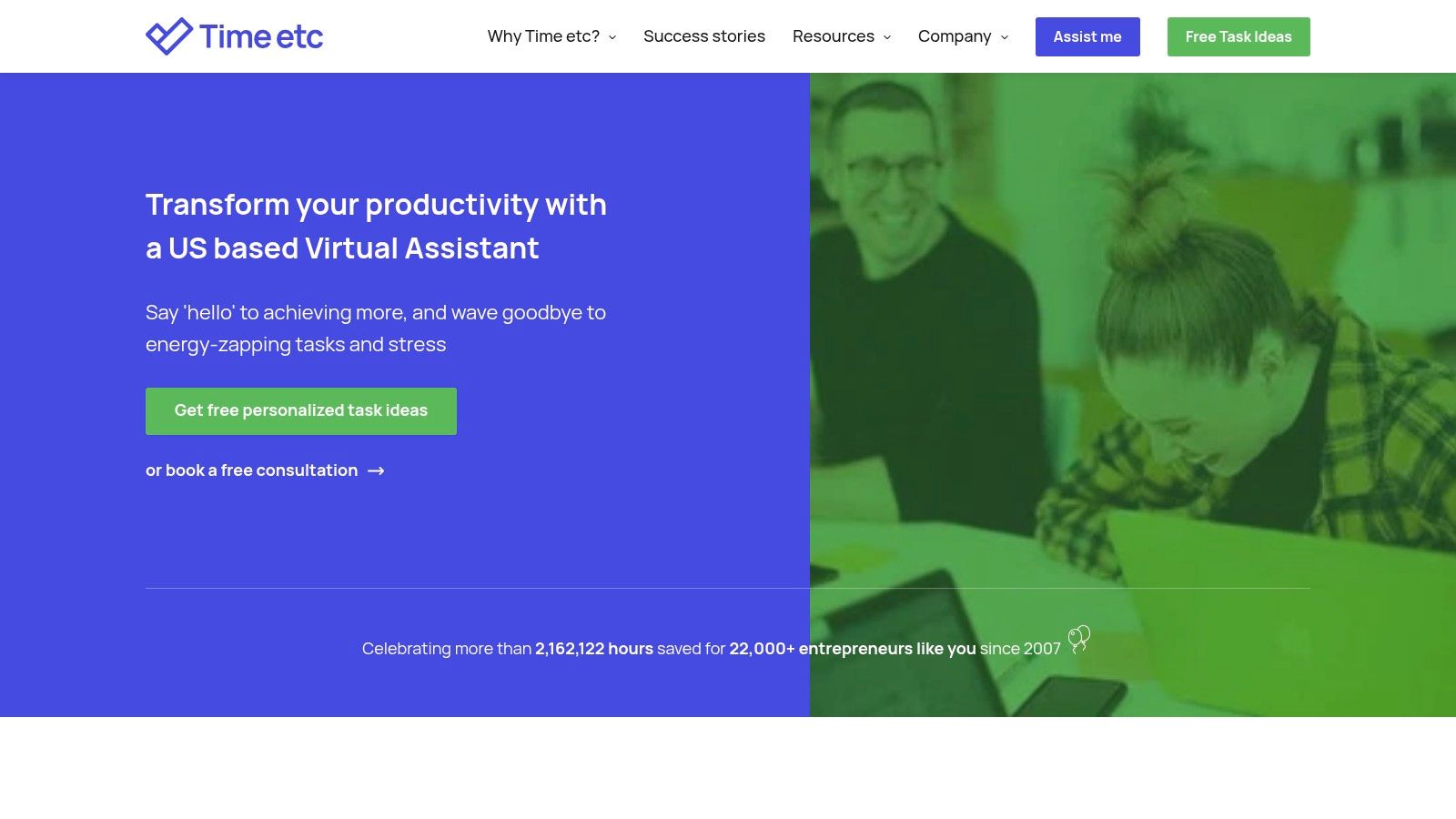
Time Etc matches businesses with dedicated U.S.-based assistants for recurring work like email and calendar management, research, travel, writing, and social media. Monthly plans start at $390 per month for 10 hours, with options from 10 to 60 hours. That's a predictable entry point if you have a small but steady list of tasks.
Who it works for
Time Etc suits a founder or small team that can estimate monthly hours. The dashboard tracks time spent on tasks, and hours can be shared across a team, which makes the 10-hour plan more practical than it sounds. Additional assistants can be added without opening a new account.
- Published pricing: The site lists plan tiers, so you can compare costs before a sales call.
- Rollover and flexibility: Unused hours roll over on some plans, and clients can change plans or cancel without a long-term commitment.
- Satisfaction guardrail: Time Etc includes a satisfaction guarantee and an option to switch assistants if the fit is not right.
The trade-off is that hourly bundles work best for ongoing support. One-off projects can burn the smallest bundle quickly, and you need to estimate your monthly hours before choosing a tier. If you're still weighing whether a VA is worth it, this Databird Journal article on why businesses need a virtual assistant in 2024 lays out the operational case.
3. BELAY
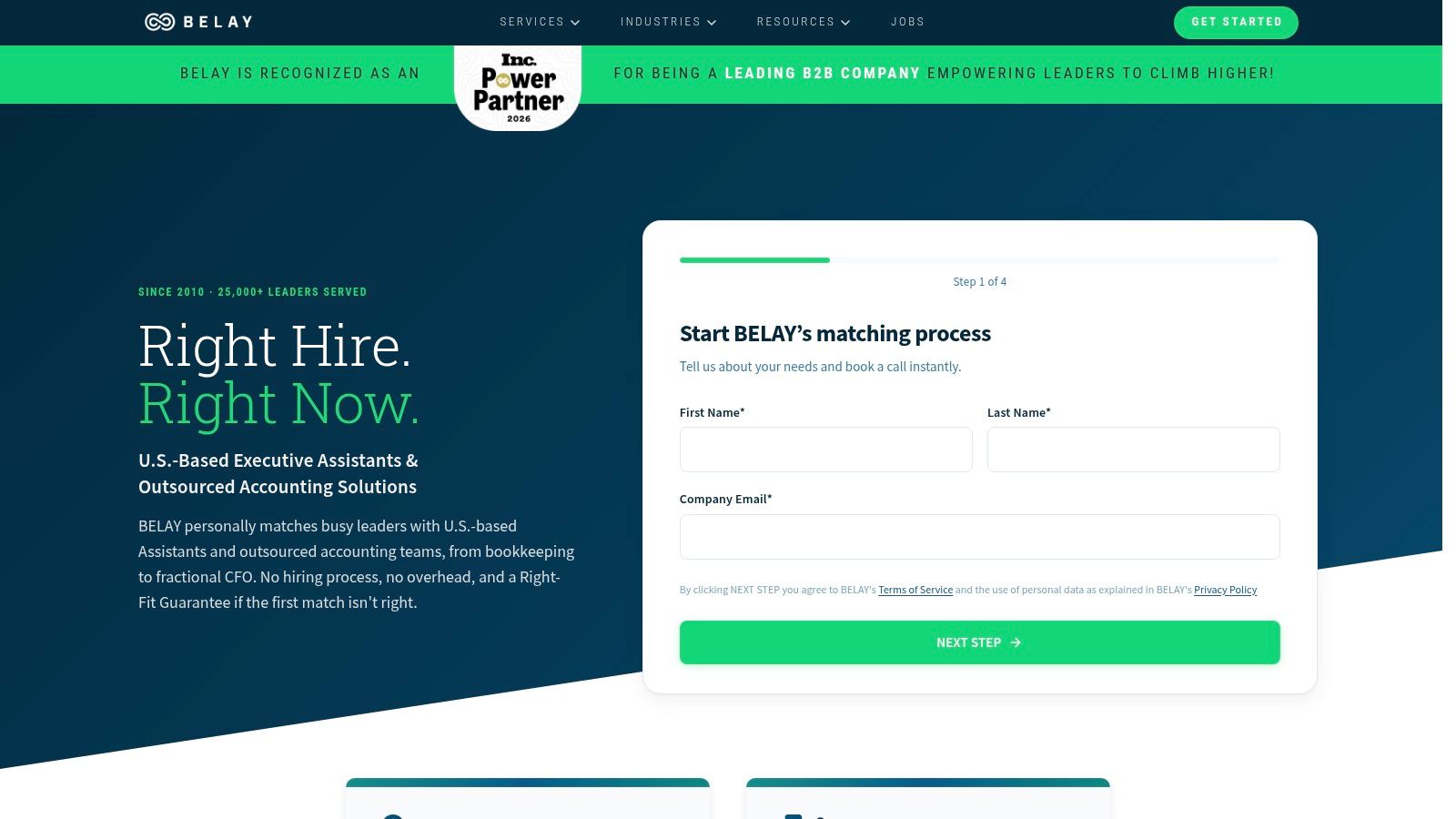
BELAY sells a managed match, not just a remote worker. It provides U.S.-based virtual assistants and also offers bookkeeping, marketing, and social media support from the same provider. That breadth helps if you want one vendor for several kinds of business support without managing separate freelancers.
The managed-service trade-off
Pricing is available by quote because arrangements are scoped to the role and hours. That makes quick price comparisons harder, but it also means you aren't buying a preset bundle that may not fit.
- U.S.-based assistants: The company staffs domestically, which may suit buyers who want familiar working hours and easier communication.
- Matching and rematching: BELAY runs a matching process with client-success support, and rematching is available if the initial fit is not right.
- Multiple support types: Executive assistance, bookkeeping, marketing, and social media can be covered by one provider.
Manager's note: Quote-based pricing is not a red flag. But ask for the same scope from every quote vendor: hours per month, number of users, onboarding fee, and notice period.
BELAY fits leaders who want premium executive support and are prepared to pay for matching and oversight rather than picking a name from a roster.
4. Prialto
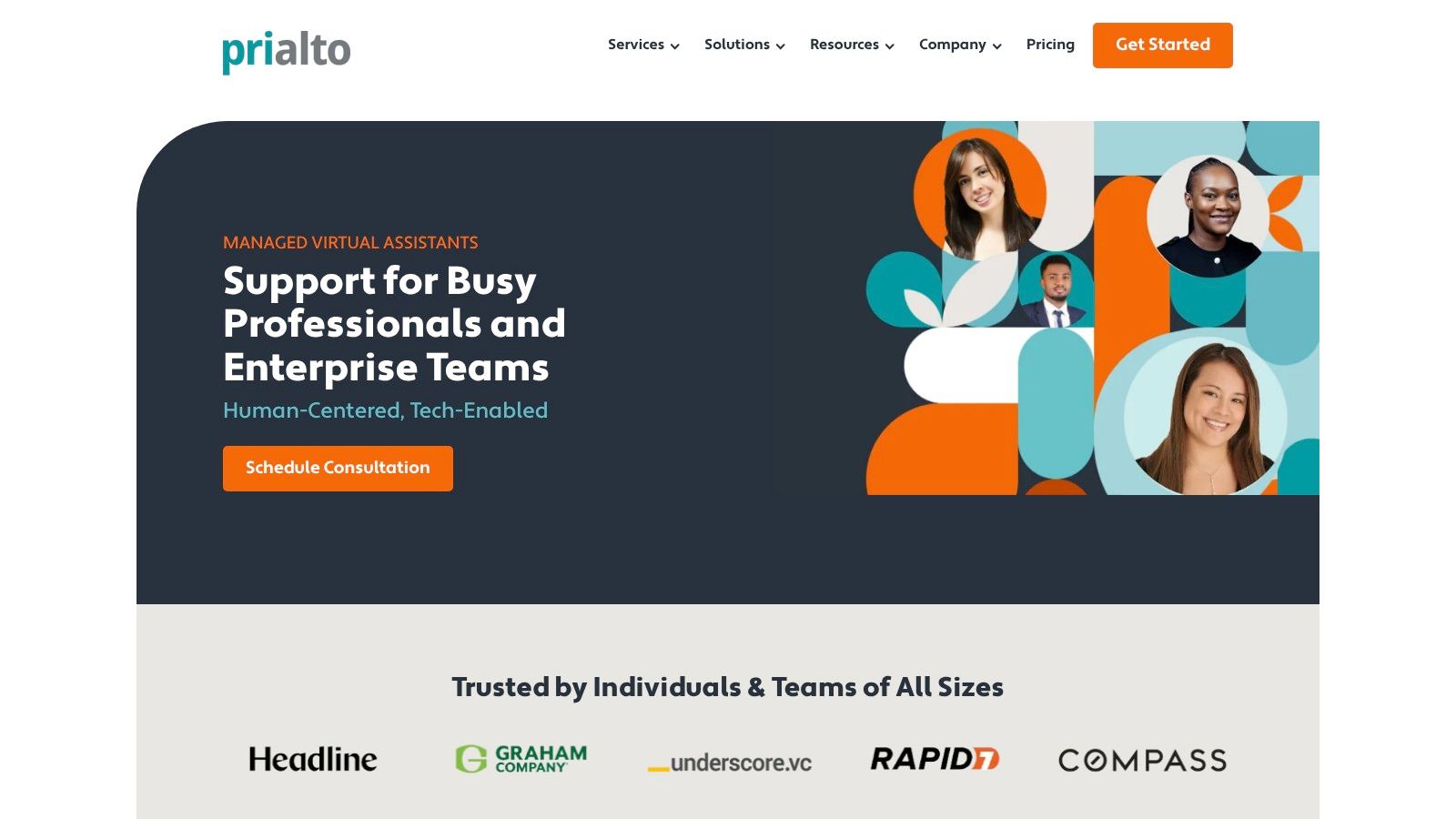
Prialto fits founders who want a dedicated assistant plus a management layer around the work. The model is built for steady admin workloads, where handoffs, backup cover, and repeatable process matter as much as the assistant's daily output. A standard unit includes 55 hours per month at $1,500 to $1,600 per month, plus a setup fee unless you agree to a one-year term. An Outsource Teams roundup of virtual assistant statistics reports that 72.24% rely on an administrative or executive assistant, a useful reminder that this work is already central inside many organizations.
What the managed layer does
Prialto assigns a dedicated assistant, backup assistants familiar with your processes, and an engagement manager. The manager helps document repeated delegation workflows. That matters when the bottleneck is inconsistent handoff rather than raw effort.
- Standard support unit: 55 hours per month with flat pricing and no overage fees.
- Backup coverage: Backup assistants can step in during vacation or sick days, reducing disruption.
- Process design: The engagement manager helps turn repeated tasks into standard procedures.
Confirm before signing
A 55-hour unit can be wasteful for an irregular 10-hour workload. Each unit has a 90-day minimum, so check rollover terms before treating unused hours as flexible capacity. Setup fees and staffing location also need review when comparing providers. I would shortlist this model for an executive team with steady delegation needs, where the process layer is the core value. For project-based work with few recurring admin tasks, the commitment may cost more than it returns. And Prialto should be judged on that fit, not on brand recognition alone.
5. Zirtual
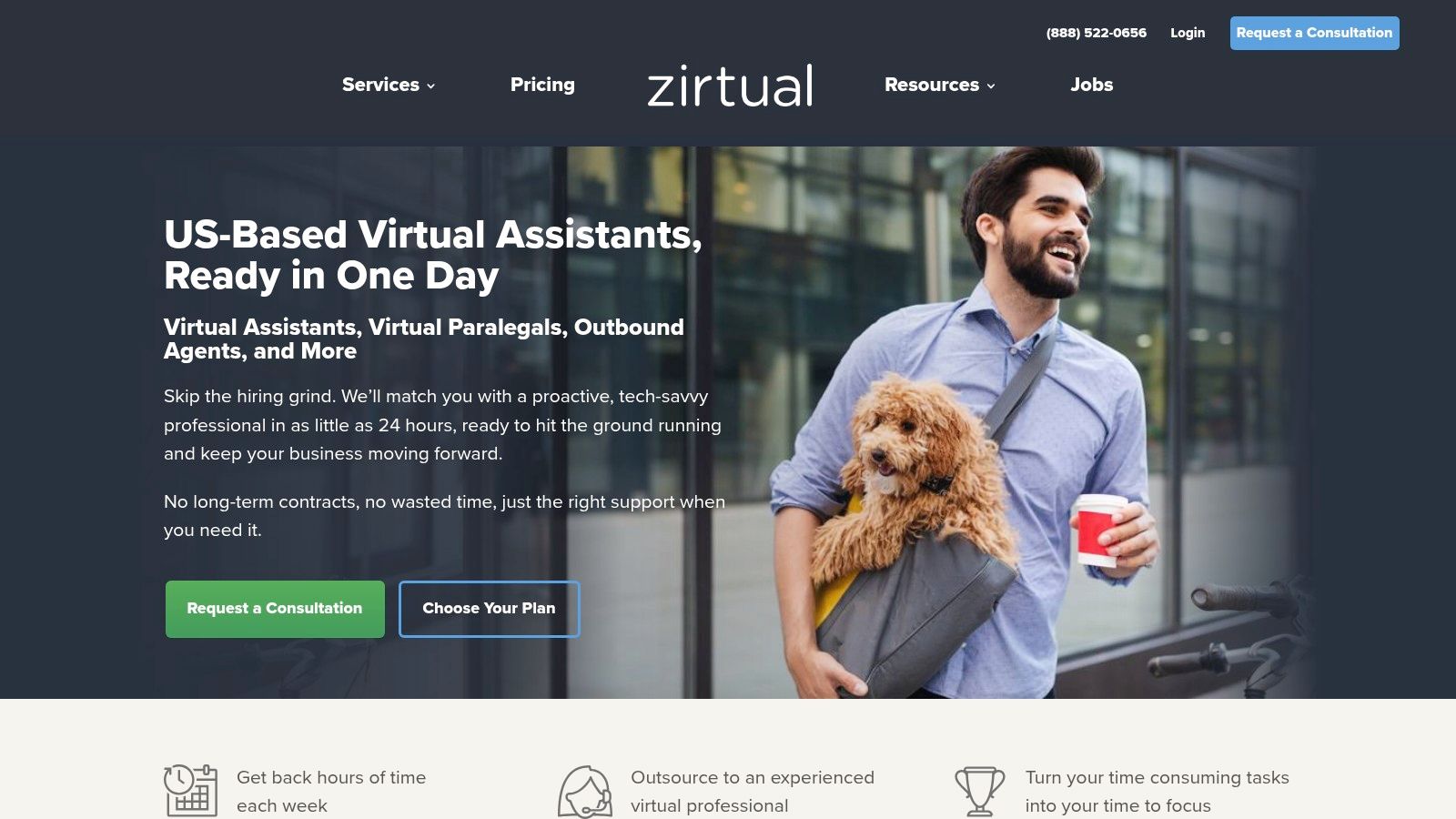
Zirtual is a monthly task-hour plan that moves fast. Plans range from 12 to 45 hours per month, start at $599 per month, and include a U.S.-based, college-educated assistant. Larger plans allow multiple users, which works for a small business supporting several founders or team members without buying separate accounts.
What to inspect in the plan
- No rollover: Unused hours do not roll over. That changes the math if your workload is uneven.
- Excluded work: Legal or HR tasks, customer support, sales, and receptionist services are excluded. Read the exclusions before you assume the assistant can cover a front-office phone line.
- Response expectation: Zirtual advertises two-hour response times during U.S. business hours, which matters if you need near-real-time support.
Zirtual's onboarding includes a delegation strategy call and task-specialist support. That helps if you know you have admin work but have not yet figured out how to delegate it. The monthly task-hour model fits a team with a repeatable set of tasks, not a role that requires full-time availability or irregular bursts. If you need a person on call all day, a dedicated full-time plan will fit better than a 12-hour bundle.
6. Wing Assistant
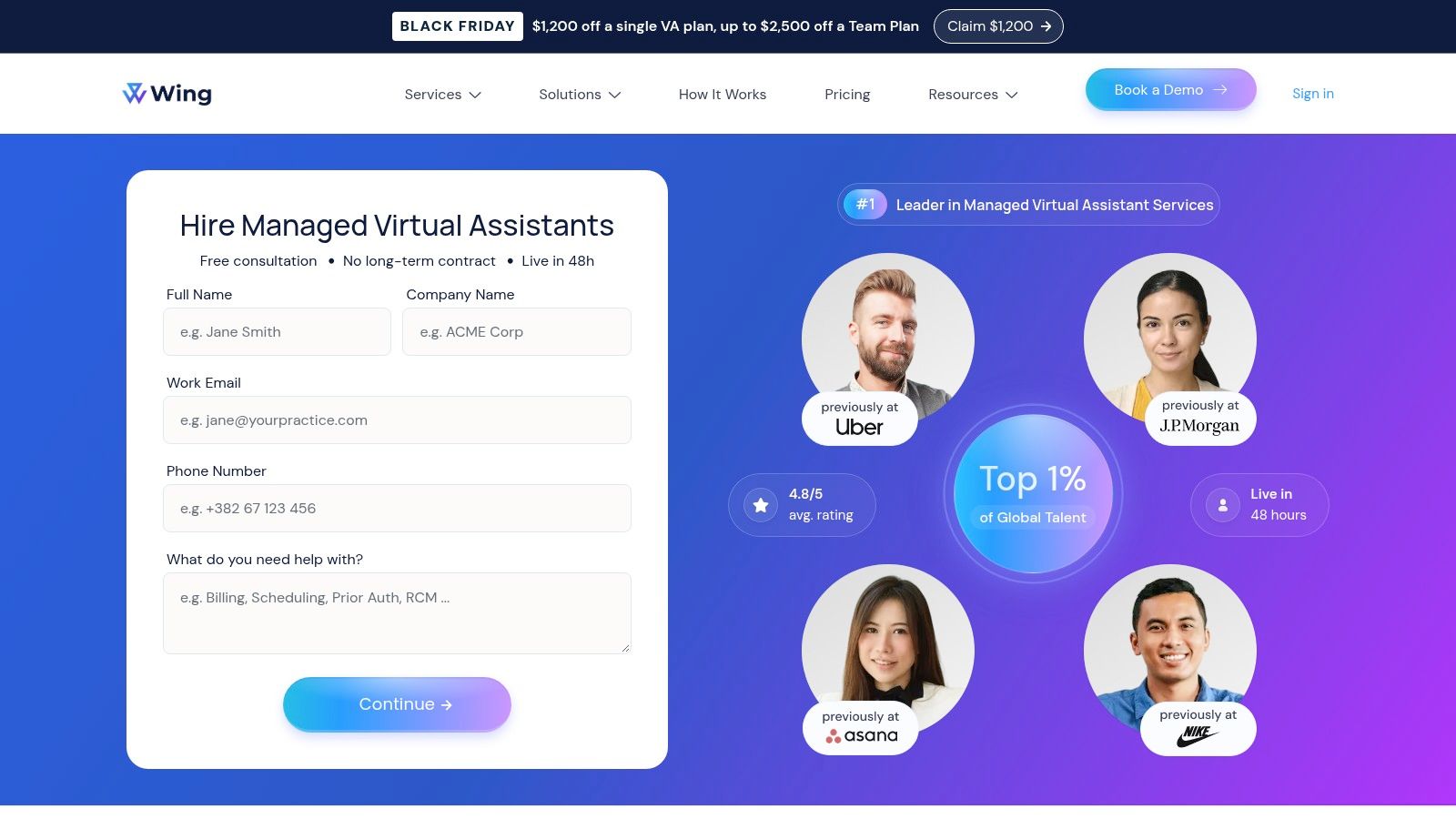
Wing Assistant sits between a premium U.S. bundle and a full outsourcing firm. General plans list $699 per month for 80 hours and $999 for 160 hours, which is a lot of capacity for the price. The assistant is dedicated, and a customer success manager plus quality-control support are included.
Check staffing location first
Wing offers both global and U.S.-based staffing. That is not a flaw, but it means one plan may be staffed from a different country than another. Published rates for the industry show why this matters: according to Stealth Agents, Philippines-based virtual assistants averaged $11.33 per hour in 2025-2026, while U.S.-based virtual assistants averaged $35.61 per hour. A lower headline price may just reflect a different staffing location.
- Part-time and full-time plans: The 80-hour tier offers more hours than many small bundles, while 160 hours approaches full-time.
- Time-zone alignment: Scheduling can be aligned with your preferred time zone, but confirm whether that is guaranteed or best effort.
- Specialized compliance: Wing lists HIPAA-compliant assistant plans, which matters in healthcare-adjacent workflows.
Contract check: Before you pay, ask whether the plan is U.S.-based or global, whether hours roll over, and whether the HIPAA tier requires a separate agreement.
7. Boldly
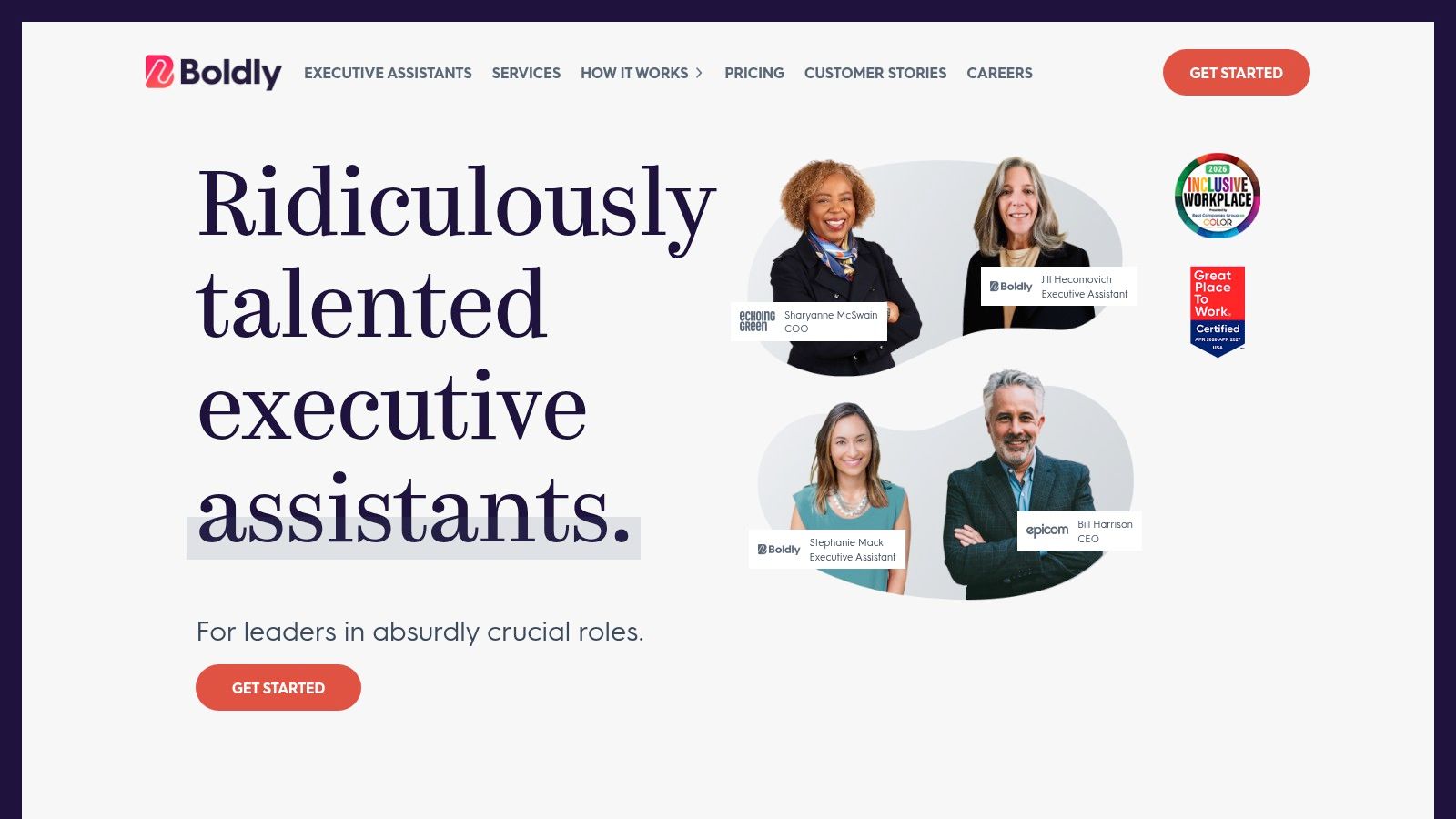
Boldly is the premium subscription option. Monthly plans range from 40 to 100 hours, with pricing starting at $2,600 per month for 40 hours. That is more than most entry-level hourly bundles, but the value is in experienced staff and built-in backup coverage. The company reports staff experience of 10 to 15 years, and clients can meet the proposed staff member before subscribing.
What the higher price buys
- Backup coverage: Plans include trained backup coverage for vacation or illness, so a single assistant's absence does not stop your workflow.
- Flexible plan changes: Boldly says plans can be upgraded, downgraded, or canceled at any time, with no additional user fee listed.
- Skill-based matching: Matching considers skills and fit rather than generic availability.
Confirm the fine print
The entry plan costs more than many smaller bundles, so it only makes sense if you use most of the 40 hours. Uneven workloads may leave unused capacity. Specialist tasks outside executive assistance are billed separately, so a request for advanced marketing operations or bookkeeping may fall outside the core plan. Rollover terms should be confirmed, because the plan materials do not make unused-hour handling obvious. Boldly fits a business that already knows it needs senior-level part-time help, not a founder testing the water with ten hours of calendar triage.
8. MyOutDesk
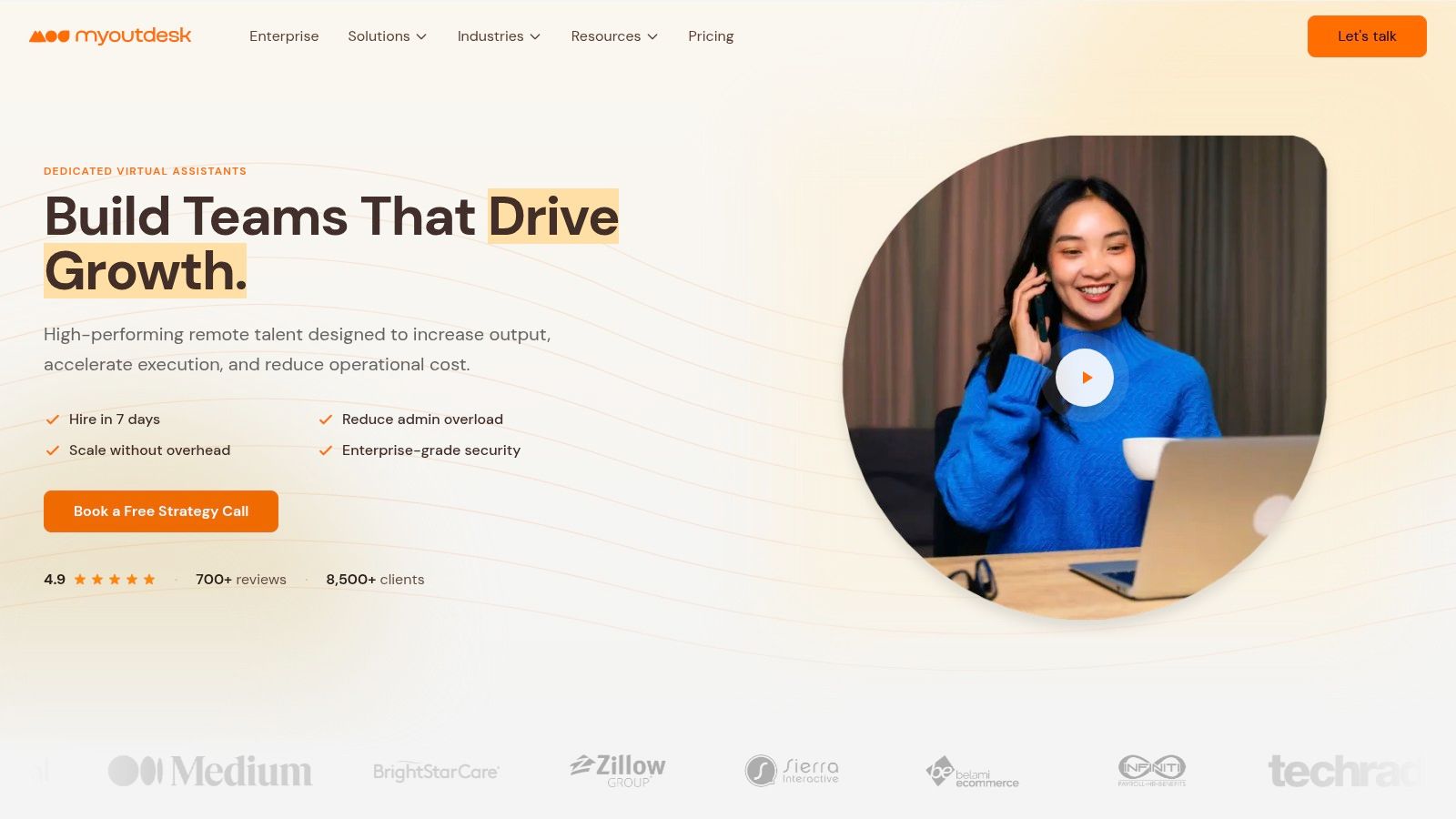
MyOutDesk is a full-time staffing company, not an hourly assistant service. It recruits, screens, and onboards dedicated staff for administrative, executive-assistant, marketing, sales, customer-service, and accounting roles. Managed outsourcing starts at $1,988 per month, while specialized outsourcing starts at $2,500 per month.
When full-time is the right unit
A full-time person can build real familiarity with company systems, follow a repeatable process, and take ownership of ongoing work. The provider handles sourcing and some employment administration, which reduces the burden on your team.
- Role coverage: General admin and executive support sit alongside marketing, sales, customer service, and accounting.
- Account management: Recruiting, screening, onboarding support, and account management are included.
- Specialized tier: More complex or industry-specific roles sit in a higher-priced tier.
The trade-off is commitment. A full-time arrangement is excessive for intermittent tasks, and pricing is not directly comparable with part-time hour bundles. Location, contract term, and role-specific inclusions should be confirmed before the first invoice. If you're a one-person business deciding how much to outsource, this Databird Journal piece on business know-hows for a one-man team is a useful primer before you commit to a full-time remote role.
9. Delegated
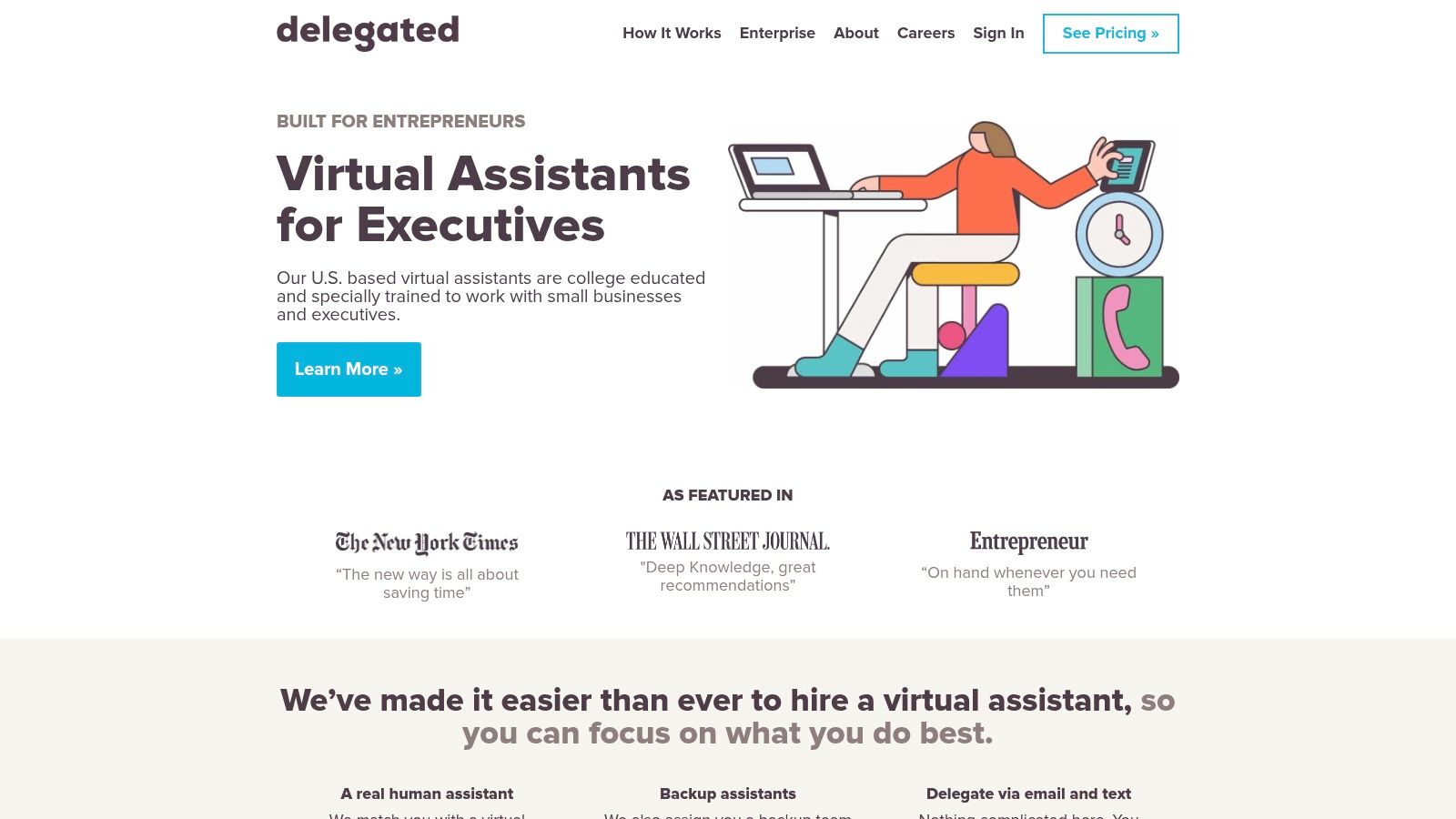
Delegated, formerly Red Butler, offers dedicated U.S.-based assistants and takes task requests by text, email, or phone. Plans start at $420 per month for 12 hours, and unused time rolls over for 30 days. That rollover is a small but useful safety valve if a week disappears.
What the plan includes
- U.S.-based staffing: The company says it does not outsource overseas, which may matter for communication and data-handling expectations.
- Assistant interview: There is an opportunity to interview the assistant before you commit.
- Optional receptionist service: A virtual receptionist is available as an add-on if you need call answering.
- Money-back window: Delegated advertises a 14-day money-back guarantee.
Watch the exclusions and unit pricing
Additional hours cost more than the base-plan hourly rate, so buying extra hours every month may be more expensive than moving up a tier. Some work is excluded, including licensed professional work, physical errands, creative design, and impersonation such as outbound sales calls. The pricing page shows multiple plan sets, so confirm which one applies to your request mix. For a founder weighing whether to outsource almost everything, the Databird Journal guide on starting a business and why you should outsource everything gives a useful framework before you choose a 12-hour plan.
10. Fancy Hands
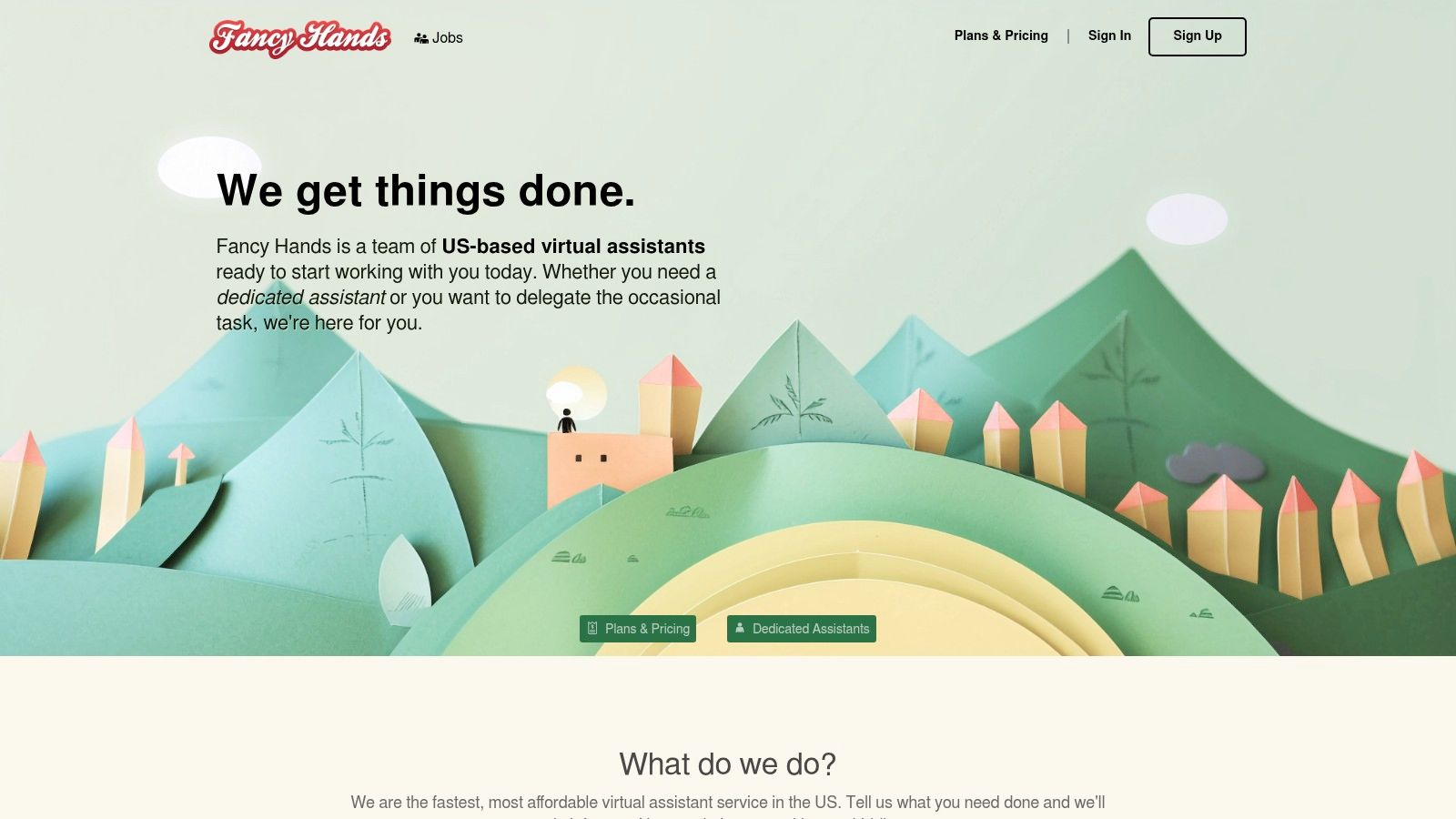
A reservation, a quick lookup, or a scheduling call fits request-based help better than an ongoing role. Fancy Hands handles small, well-defined tasks without assigning a single assistant to your account. Match it to the discrete tasks in your weekly workload, rather than comparing it with a dedicated assistant on price alone.
Where request-based help wins
Fancy Hands sells plans with 3, 5, or 15 requests per month, lists current rates on its site, and limits standard requests to 20 minutes of work. Compare those request counts with your actual task list. A monthly request allowance is different from a bundle of assistant hours.
- Good for occasional work: Reservations, basic research, and quick lookups suit this model when each task has a clear endpoint.
- Multiple submission channels: Send tasks through the website, email, text, phone, or mobile apps.
- Continuity limit: You will not get the same person every time, so each request needs enough context to stand alone.
Recurring requests and third-party integrations are listed, and unused requests roll over. Before signing, confirm rollover terms, setup fees, staffing location, and task exclusions.
Use it for closed tasks: “Find three caterers available Friday and return quotes” gives an assistant a defined deliverable. “Manage my inbox” requires ongoing context and ownership.
The trade-off is continuity. Fancy Hands suits bounded work you can explain briefly; a dedicated assistant is a better model when tasks depend on accumulated knowledge of your business.
11. WoodBows
WoodBows gives you the choice between U.S.-based and international staffing, which is the single most important pricing lever in the VA market. Plans range from part-time to full-time, with an account manager and staff-tracking system listed. Work can be arranged around your preferred time zone.

Compare like-for-like
Because U.S.-based and international plan prices differ, a headline quote can mislead you. The same number of hours may be cheaper from an international assistant but may offer less overlap with your business day. WoodBows says assistance can begin within one business day, and plans can be canceled, but the active offer and its billing cadence should be confirmed because some promotions sit on separate pricing pages.
- Staffing-location choice: Lets you weigh domestic coverage against a lower international rate.
- Account management: An account manager and staff-tracking system are listed on plans.
- Time-zone alignment: Work can be scheduled around your preferred hours.
Fit and caution
WoodBows suits a business that wants a dedicated person but is still deciding whether to pay for U.S. coverage. The caution is standard: confirm contract commitments, overage rates, and whether the tracking system applies to all plans. If you're comparing it against a U.S.-only service, don't compare the international plan price to the domestic plan price and call it a bargain.
Service model, starting price and best-fit use case for each provider
Compare service models before monthly prices. Hour bundles cover recurring support within an allowance; dedicated staffing suits steady workloads; request-based help fits discrete tasks. The prices below describe different commitments, not equivalent capacity.
| Provider | Service model | Pricing model | Best-fit use case |
|---|---|---|---|
| HireParalegals | On-demand marketplace for vetted remote legal professionals | Quote-based | Law firms needing specialized legal support |
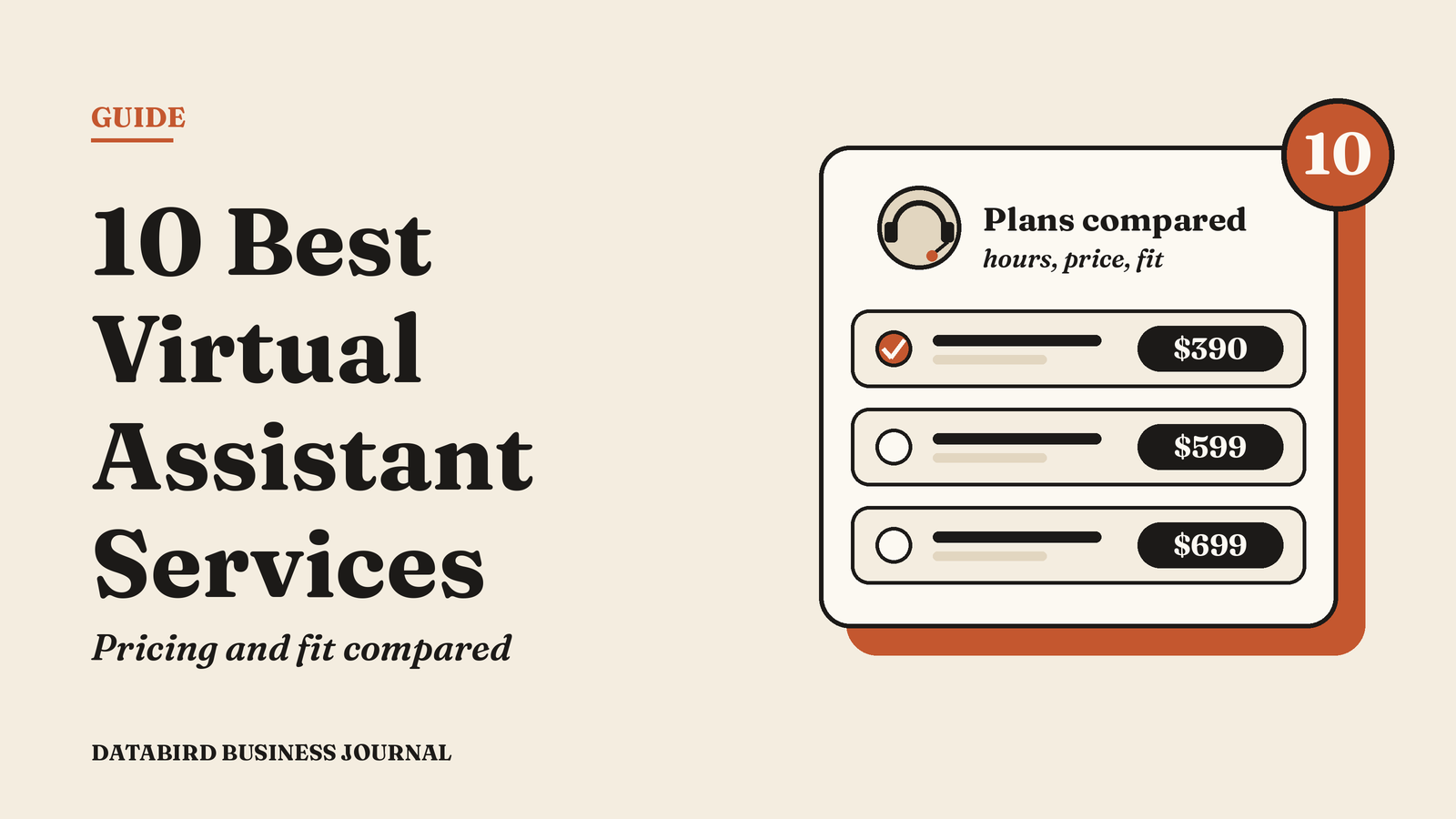
| Time Etc | Dedicated U.S.-based assistant, monthly hour bundles | $390/month for 10 hours | Founders needing recurring support |
| BELAY | Matched U.S.-based assistants with client-success support | Quote-based | Customized administrative or specialist support |
| Prialto | Managed executive support, dedicated and backup assistants | $1,500–$1,600/month | Structured delegation with backup coverage |
| Zirtual | Dedicated U.S.-based assistant, monthly task-hour bundles | From $599/month | Recurring small-business administration |
| Wing Assistant | Dedicated part-time or full-time assistant, support management | From $699/month | Consistent, higher-hour support |
| Boldly | Experienced staff through monthly subscriptions | From $2,600/month | Experienced support with backup coverage |
| MyOutDesk | Full-time outsourced staff, recruiting and account management | From $1,988/month | Substantial, steady workloads |
| Delegated | Dedicated U.S.-based assistant, monthly task-hour bundles | From $420/month | Front-office, back-office or personal support |
| Fancy Hands | Request-based help for discrete tasks | Plans of 3, 5 or 15 requests per month | Occasional, well-defined tasks |
| WoodBows | Dedicated assistants, U.S.-based or international | Quote-based; U.S. and international rates differ | Dedicated support with staffing-location options |
A starting price alone does not establish fit. Before signing, confirm setup fees, rollover terms, staffing location and task exclusions. For hour bundles, establish what the allowance covers. For dedicated staffing, confirm the commitment and backup arrangements. For request-based help, clarify what counts as a request.
Matching a Provider to Your Actual Workload
Your inbox fills up, a client needs a document cleaned, and the next meeting is already starting. That is the point to match the service model to the workload, not scan brands for the lowest rate. Track recurring tasks for two weeks and total the hours. Write down every inbox, calendar, research, and data-entry request you would hand off. A few hours a week points toward an hourly bundle or request-based help, where you can test fit without a large commitment. Steady, full-time demand points toward dedicated staffing, where setup fees, minimum terms, and recruiting support matter more than the lowest hourly rate.
The buyer profile is not Fortune 500. Provider-reported data cited by VA Masters shows 87% of client organizations had fewer than 50 employees, and 57% had 10 or fewer employees. Small teams are the main market for remote executive assistance, customer service, scheduling, research, and back-office operations. That changes the selection criteria. You need a provider that can handle tight budgets and context-switching, not just large-scale operations.
Test the workflows that carry risk
Do not evaluate a provider by its marketing page. Build a short controlled task set with email drafting, document extraction, scheduling, and knowledge retrieval. Measure factual accuracy, successful task completion, escalation frequency, response latency, and correction effort. A 2026 cross-platform study of 388 active AI-assistant users found 82.4% use two or more models (arXiv). That finding applies to AI-assistant use, so treat it as a useful prompt to test more than one tool or workflow. It does not set a benchmark for human virtual assistant services. For human-plus-AI services, verified performance on your highest-risk workflows still matters more than brand recognition.
Use security as a pricing filter
The cheapest provider may carry the highest total cost if weak access controls create remediation, regulatory, or reputational exposure. Before you share payroll data, customer records, legal documents, or financial accounts, ask for least-privilege access, multi-factor authentication, device-management policies, background screening, breach-notification procedures, data-processing agreements, and compliant subcontracting. Unity Connect discusses remote work and outsourcing trends, but the security terms should be requested directly from every provider before sensitive data moves.
Request the same written details: included hours, staffing location, rollover rules, setup fees, and the list of excluded tasks. Then compare the total monthly cost per useful hour of work, not the headline price. A $390 monthly plan that burns 10 hours on email triage is less useful than a $599 plan that protects your calendar and reduces rework.
Put three services through the same short test before you commit. Give each one a real scheduling task, a short research request, and a document cleanup job. Choose the provider that returns clean work with the fewest corrections and the clearest audit trail. I would make that the deciding test before comparing another table.