6 Challenges That Can Affect Compensation After a Car Accident in Milwaukee, WI
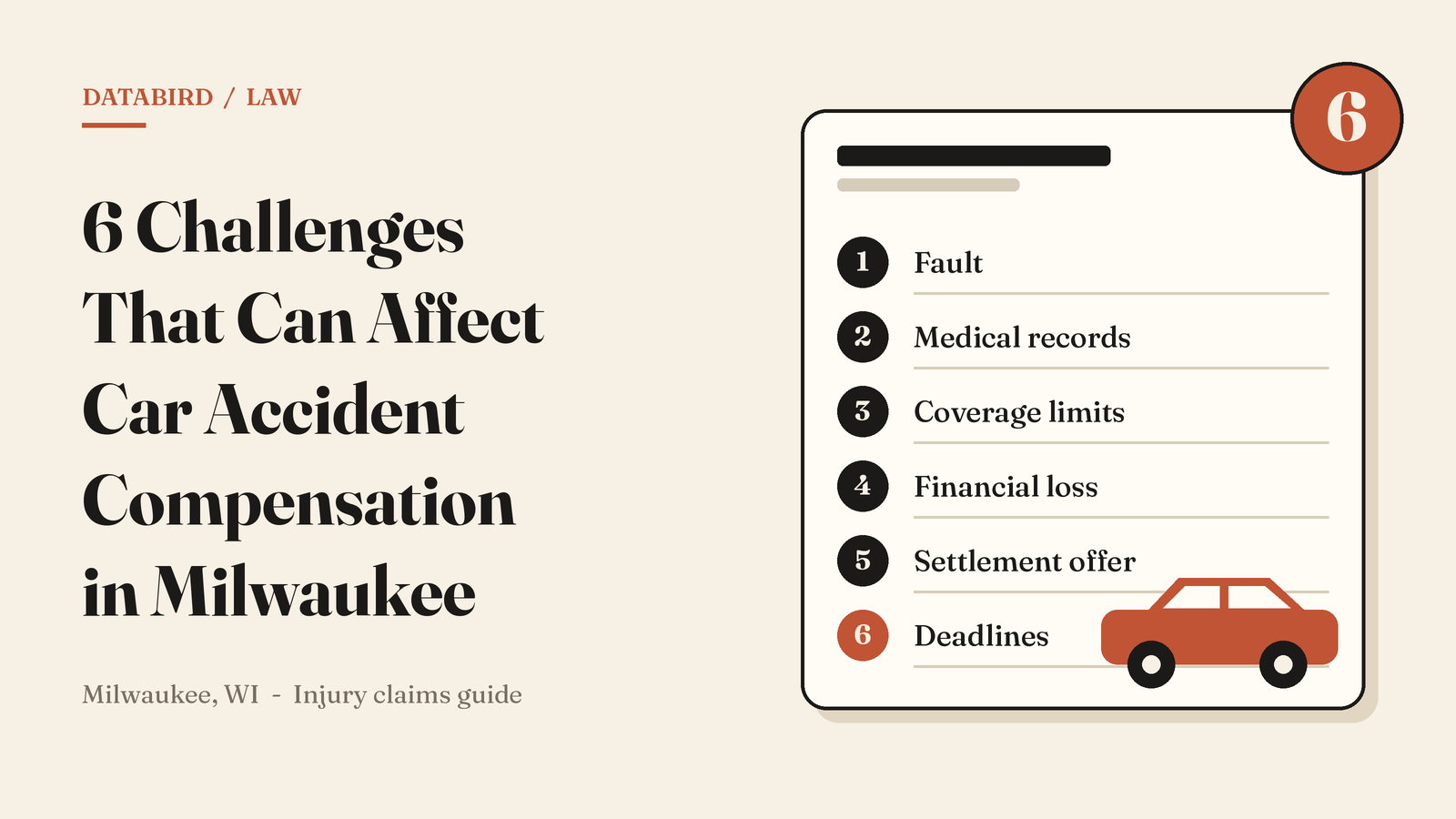
Fault, medical records, insurance limits, proof of losses, settlement offers, and deadlines can all change what a Milwaukee car accident claim is worth. Here is how each challenge works.
Milwaukee has traffic, from downtown intersections to neighborhood streets, but an accident claim can become complicated long after the vehicles are removed. Medical bills may arrive before insurance questions are settled, and disagreement about responsibility can change what someone receives. Wisconsin law places limits on claims, so the cost of an injury does not always match the amount offered.
A Milwaukee car accident attorney or an injury firm can help you understand how your claim is reviewed. Six challenges explain why accident compensation is not always as straightforward as expected, even with a detailed report and clear photographs.
1. Disagreements About Who Caused the Accident
Fault is a major dispute in a Milwaukee car accident claim. One driver may say the other ignored a signal, while the second driver describes another sequence. Police reports, camera footage, photographs, and vehicle damage may help clarify what happened, but these records do not always provide an answer.
Wisconsin uses a comparative negligence rule. If an injured person shares responsibility, their possible damages may be reduced. Recovery may be barred if their fault is greater than that of the person from whom they seek damages. With multiple people involved, the comparison can become more complicated.
2. Medical Records That Leave Questions
An injury claim often depends on records showing the type of injury, its effects, and the care received. Medical bills alone may not answer everything. An insurer might dispute whether treatment relates to the crash, particularly if symptoms were recorded much later.
Some injuries also require visits before their effects become clear. Appointment notes, test results, and treatment histories can provide a picture. Missing information does not defeat a claim, but it may make disagreements harder to resolve.
3. Insurance Coverage That Falls Short
A serious collision can produce expenses higher than the available insurance coverage. Wisconsin requires minimum liability coverage for most drivers, but those minimum amounts may not cover injuries or property damage.
The situation may become more confusing if a driver has inadequate coverage or a policy dispute arises. Other available coverage can depend on insurance contracts and circumstances. A large medical bill does not guarantee that an insurer will pay that amount. Coverage limits and documented losses matter during discussions.
4. Difficulty Showing the Full Financial Loss
Compensation can involve more than a hospital invoice. A person may miss work, need ongoing care, or face expenses connected to reduced ability to perform activities. Showing those losses can be difficult if records are incomplete.
Pay statements, receipts, medical information, and employer documents may help explain the financial impact. Pain and reduced enjoyment of daily life are harder to measure because they do not come with simple price tags. Different parties may place different values on reported harm.
5. Settlement Offers Before Losses Are Clear
An early insurance offer can look appealing when bills are coming in. Still, a settlement amount may be discussed before the effect of an injury is understood. The insurer may question future treatment needs or disagree about how much the claim is worth.
Settlement documents matter. A release may end the right to pursue further payment for covered claims. That makes the wording and scope of an agreement important, not just the number printed on it. Offers are assessments, not guarantees of fair value.
6. Deadlines and Evidence That Disappears
Wisconsin gives three years to file a lawsuit for injuries arising from a motor vehicle accident, although exceptions and special rules can apply. Missing an applicable deadline may prevent a claim from moving forward.
Evidence has a timeline of its own. Businesses may delete camera recordings, vehicles may be repaired, and people can forget details. These changes can make it harder to establish what happened or show why a particular loss is linked to the collision. Filing rules and evidence concerns are separate challenges, but both can influence the outcome.
A Better Picture of Compensation
Car accident compensation is not determined by one bill or one statement. Fault, medical records, insurance coverage, proof of losses, settlement terms, and deadlines all affect how a Milwaukee claim may be assessed.
Some people consult a Milwaukee car accident attorney to discuss the process. The strongest discussions are built around reliable information rather than assumptions about what an accident should be worth during a difficult recovery.